For UK developers, architects, and planners, one of the most persistent challenges with heat pump adoption is noise. Systems designed for efficiency can attract objections if they disturb neighbours or exceed planning thresholds. The real difficulty lies in predicting acoustic impact, understanding planning requirements, and choosing mitigation before problems arise.
Unlike other technical issues, heat pump noise in particular, is highly perceptual. Residents notice it immediately, and once complaints are made, they can escalate quickly. This makes proactive acoustic planning not just a regulatory hurdle, but a vital part of delivering successful, sustainable projects.
Heat pump noise is regulated in the UK through planning rules such as MCS 020 and standards like BS 4142. By modelling sound levels, choosing quieter models, and applying barriers or vibration isolation, project teams can meet requirements, avoid complaints, and prevent costly retrofit conditions due to noisy heat pumps.
Why Heat Pump Noise Is a Growing Concern
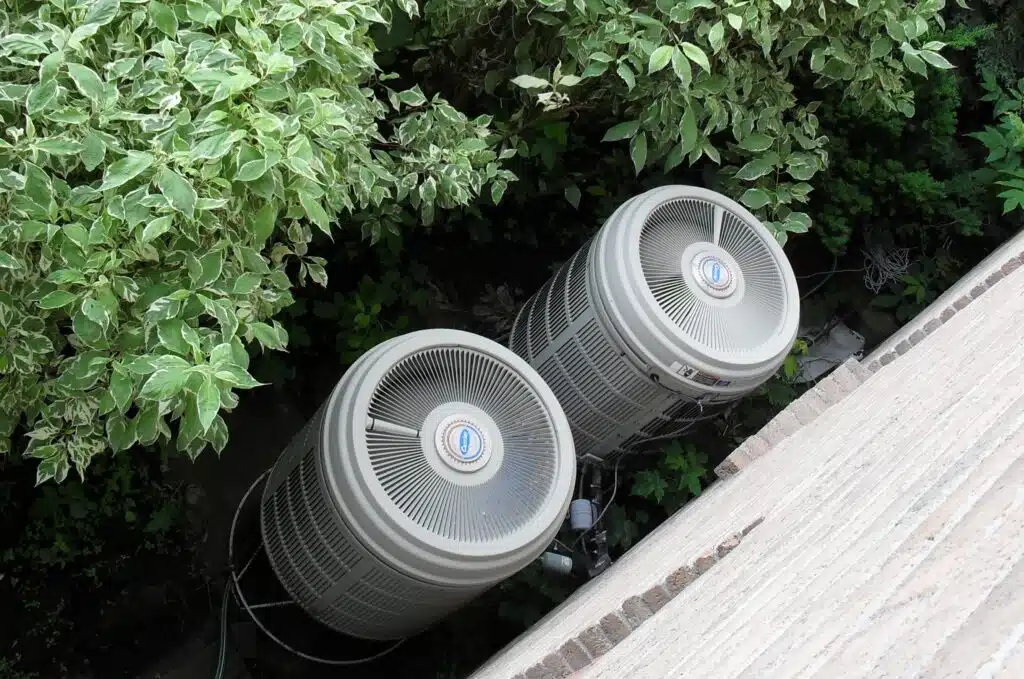
Heat pumps are central to the UK’s decarbonisation strategy, yet they are also one of the few renewable technologies that can create local disruption. A unit that seems modest in output can quickly become a noisy heat pump in a quiet suburban street. This is particularly problematic for built up residential areas, or when installing heat pumps at older residential buildings with poor or unknown acoustic performance.
Planning officers and environmental health departments are tasked with protecting residents from nuisance. Complaints about low-frequency hum or constant night-time noise are taken seriously, even if the actual sound levels are relatively low. This could result in enforcement action, which would require you to remove the air source heat pump.
This means that acoustic considerations now play a major role in planning applications. For developers, the risk is more than inconvenience: delays, added costs, and reputational damage are all possible outcomes if heat pump noise complaints are not prevented at source.
Guidance and Planning Requirements in the UK for Heat Pump Noise
There is no single national law covering heat pump noise, but several key frameworks shape what planners expect:
- MCS 020 (Planning Standards for Permitted Development Installations of Air Source Heat Pumps, 2017): Sets out the conditions under which domestic units can be installed without planning consent. Central to this is the 42 dB(A) external noise limit, measured at one metre from the nearest neighbouring habitable room window. This calculation must be completed using the MCS methodology.
- Permitted development rules: In England, if a domestic heat pump meets MCS 020 conditions (including the noise limit, one-per-property restriction, and siting rules), no separate planning permission is required.
- BS 4142:2014+A1:2019: For larger schemes or contentious sites, this standard is widely used by councils to assess industrial and commercial sound against background levels. A rating difference of +5 dB is usually considered adverse.
- Local planning policies: Many authorities reference BS 8233:2014 and occasionally WHO guidelines for residential noise, particularly when multiple units are proposed.
In short, MCS 020 governs small-scale domestic projects, while BS 4142 applies more often to multi-unit or commercial developments. Planners expect clear evidence of compliance, not just assurance that a unit is “quiet.”
Why are Air Source Heat Pumps Noisy?
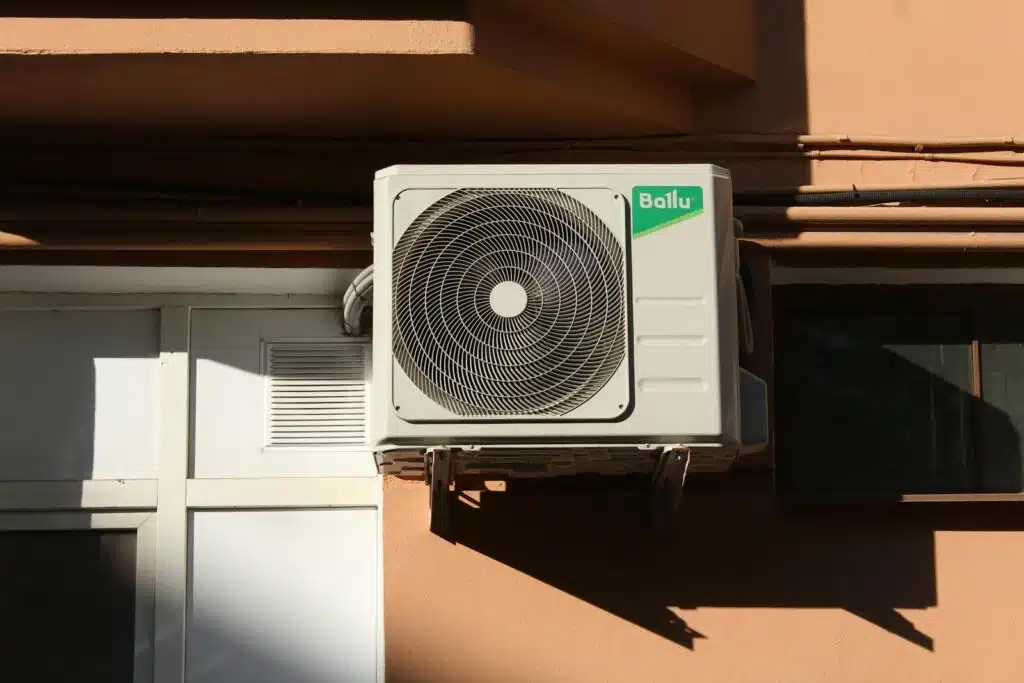
Noise emissions are rarely a single, uniform sound. Instead, several sources interact to create the overall acoustic profile that neighbours perceive.
Compressor hum is one of the most persistent issues. This low-frequency tonal noise is not easily masked by background activity, which makes it especially noticeable indoors during the evening or night.
Fans add a different character. The broadband “whoosh” from blades moving large volumes of air is more audible outdoors, often in gardens or patios. Although less tonal than the compressor, it can still become intrusive when continuous.
Defrost cycles introduce short periods of elevated noise, sometimes with a change in pitch, which can catch residents off guard in cold weather.
Finally, mounting resonance is often overlooked. A poorly fixed unit can transmit vibration directly into walls or floors, creating the impression of a “heat pump noisy” even when measured levels are modest.
What complicates matters further is variability between products. Two units of the same heating capacity may differ by 3–5 dB(A) in sound output depending on design, casing, and fan technology. For planners and specifiers, this makes product selection a critical decision—one that can determine whether a project faces smooth approval or recurring heat pump noise complaints.
How Heat Pump Noise Is Predicted and Assessed
Professional assessments generally follow three steps:
- Manufacturer data: Most provide a sound power level (LwA), usually between 55–65 dB(A) for residential units.
- Propagation modelling: Predicts how sound reduces over distance, accounts for barriers, and considers reflections.
- Background sound survey: Establishes the typical environment, often overnight, to judge impact.
Example – Heat Pump Noise
A 7 kW air source heat pump rated at 60 dB(A) could produce 40 dB(A) at 10 m in free-field conditions. In a quiet suburban area where background noise drops to 33 dB(A) at night, this may equate to a +7 dB rating difference, considered adverse under BS 4142. This can be difficult to achieve, even with strong additional mitigation measures.
MCS 020 provides its own calculation tool for heat pump noise, which simplifies this process for domestic installations. The result determines whether the unit qualifies as permitted development or requires full planning.

How to Reduce Heat Pump Noise
Mitigation is best addressed at the design stage, where small changes have a big impact. This is to say that in order to save costs and delays, its often best practice to spend more at an earlier stage with an acoustic consultant for piece of mind.
Positioning
Siting units away from bedrooms, shared boundaries, or reflective surfaces often reduces levels enough to comply. Corner gardens, rear elevations, or detached garages can make installations effectively inaudible.
Acoustic screening
Solid fencing, masonry walls, or purpose-built enclosures block the line of sight between the unit and receptor. A well-designed 1.8 m timber fence placed close to the source may reduce sound by 6–8 dB. Specialist enclosures achieve 10–15 dB but cost more.
Anti-vibration measures
Rubber or spring isolation mounts stop vibration entering the building structure. This prevents the “rumble” that often prompts heat pumps noise disputes.
Low-noise models
Manufacturers now offer premium models that operate below 40 dB(A) at one metre. The upfront cost is higher, but these units can eliminate the need for barriers altogether.
Operational settings
Night-time setback modes reduce fan speed, lowering noise during the most sensitive hours. While efficiency drops slightly, the benefit is fewer complaints.
Scenario: Urban Retrofit
A homeowner in Bristol installs a 5 kW air source heat pump in the small rear garden of a Victorian terrace. The unit is placed just two metres from the neighbour’s kitchen window, a location chosen largely for convenience rather than acoustic performance. At first, the installation seems successful, but within weeks the neighbour reports a constant low hum that becomes particularly noticeable during quiet evening hours.
Environmental health officers are called to investigate. Their measurements show 44 dB(A) at the neighbour’s window, exceeding the MCS 020 permitted development threshold of 42 dB(A). Because the unit fails the calculation, the installation is no longer considered permitted development, triggering potential enforcement.
Rather than face removal, the installer works with the homeowner to reposition the unit further down the garden and erect a 1.8 m close-board fence. These changes reduce predicted levels to 37 dB(A), comfortably within limits.
This scenario highlights how relatively minor placement decisions can escalate into formal complaints. It also underlines why early acoustic modelling is critical: a short assessment at the design stage could have prevented both the enforcement risk and the breakdown of neighbourly relations.
Scenario: Small Housing Development
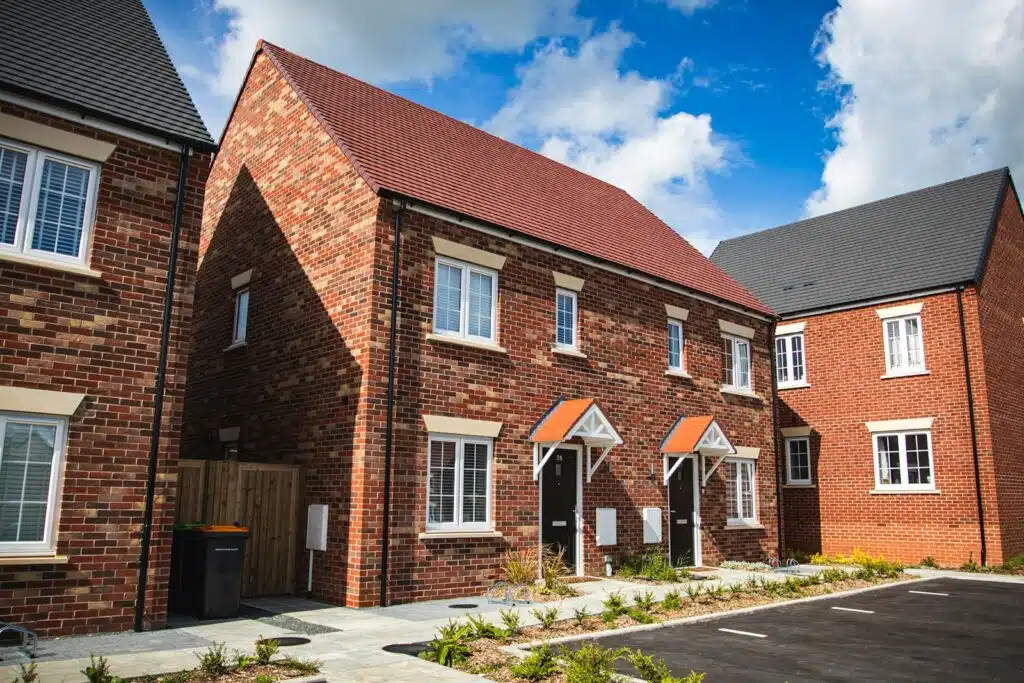
A developer designs six semi-detached homes, each with a 6 kW unit. The initial layout places all of the outdoor units side-by-side, only four metres from opposing façades. On paper this seems efficient, but acoustic modelling predicts façade levels of around 47 dB(A), which is comfortably above the MCS 020 permitted development threshold of 42 dB(A).
To resolve the issue, the design team revises the layout. Units are alternated between plots to increase spacing, 1.8-metre close-board fences are specified along garden boundaries, and two plots are upgraded to quieter models. The combination of these measures brings predicted levels down below 40 dB(A).
Because compliance is demonstrated in the planning submission, the application proceeds without delay, avoiding objections from neighbours and preventing future air source heat pump noise complaints once the properties are occupied.
Handling Noise Complaints Post-Installation
When complaints occur, councils usually assess using BS 4142:2014+A1:2019 rather than MCS 020, because the latter was written to determine eligibility for permitted development, not to manage disputes once systems are installed. BS 4142 is more flexible and better suited to enforcement: it compares the specific noise from the heat pump with the background sound level at the complainant’s property and then applies penalties if the noise is tonal, intermittent, or clearly noticeable. This means a unit can technically meet MCS 020 but still be found problematic under BS 4142 if the character of the sound draws attention.
Outcomes vary depending on the severity of the impact. If the difference is small and judged insignificant, officers may take no further action. More often, a mitigation notice is issued, requiring the owner to add acoustic fencing, reposition the unit, or activate a “quiet mode.” In some cases, councils impose time-of-use restrictions, such as limiting operation overnight. The most disruptive outcome is full replacement of the unit with a quieter model, which can be expensive and logistically difficult.
For homeowners, any enforcement is disruptive and can strain neighbour relations. For developers, unresolved complaints can escalate into planning breaches and reputational damage. Ultimately, proactive design, early acoustic modelling, and adherence to both MCS 020 and BS 4142 remain the most reliable safeguards.
Cost Implications of Noise Mitigation
Noise control inevitably introduces additional costs into a project, yet when weighed against the potential for planning refusal, formal complaints, or retrofits, these costs are modest. Importantly, they can often be anticipated at design stage and budgeted for, rather than appearing later as unplanned expenses.
A simple timber fence is usually the first line of defence. A well-constructed 1.8 metre close-board fence placed close to the unit typically costs £400–£600. While this is a relatively small investment, the performance is also limited: expect around 5–8 dB of reduction if the barrier fully blocks line of sight. In many suburban gardens, this is enough to tip a marginal case into compliance, but planners may ask for more robust measures if the background noise level is very low and heat pump noise is high.
A specialist acoustic enclosure is a more expensive option, priced between £1,500 and £3,000. These enclosures are designed to allow airflow while providing consistent attenuation across a wide frequency range. In practice, they can deliver 10–15 dB reduction, which is often the difference between a neighbour lodging a complaint and the installation being effectively inaudible. They are particularly useful where gardens are small or units are sited close to bedrooms.
Anti-vibration mounts are one of the most cost-effective tools. For as little as £50–£150 per unit, they isolate the compressor from rigid walls or slabs, preventing structure-borne sound from resonating indoors. Many complaints described as “rumbling” or “drumming” stem from a lack of vibration control, making this small expenditure an easy win.
Finally, many manufacturers now offer low-noise models at a premium of £500–£1,000 compared with standard versions. While this may appear significant on a single dwelling, it often eliminates the need for enclosures or barriers. For multi-unit developments, the savings can be considerable: specifying quieter models at the outset can avoid thousands of pounds in remedial works, not to mention delays caused by acoustic objections.
In practice, project teams should view noise mitigation as an insurance policy. The additional costs are minor in the context of an overall build budget but can protect against far greater expense later. Planning refusal, enforcement notices, or forced retrofits not only carry financial risk but also reputational consequences. For developers, being able to demonstrate proactive investment in noise control reassures planners and strengthens the case for approval.Factoring these early is far cheaper than dealing with objections after complaints.
Ground Source vs Air Source: A Noise Comparison
Most noise discussions focus on air source units because they have external fans. Ground source systems, by contrast, use buried pipework and indoor plant, producing little to no external sound. This can be particularly advantageous in rural settings where the existing levels of background noise are often very low. Therefore, it can be very important to know how to reduce heat pump noise.
While acoustically ideal, ground source systems require land or boreholes, making them unsuitable for many urban plots. For larger developments with space, however, they may prove more cost-effective than extensive acoustic mitigation of multiple air source units.
How to Reduce Heat Pump Noise – FAQs
Do all heat pumps need planning permission?
No. If a domestic air source unit meets MCS 020 conditions—including the 42 dB(A) façade limit—it usually qualifies as permitted development. Otherwise, planning consent is required.
What if neighbours complain even if the system complies with MCS 020?
Compliance does not guarantee freedom from complaints, but it provides strong legal protection. Councils typically use BS 4142 for investigations, and compliant installations are rarely subject to enforcement.
Can a fence alone solve a noisy installation?
Sometimes. A tall, dense barrier positioned close to the unit can reduce levels significantly. Decorative or lightweight fences are rarely effective.
How can I reduce heat pump noise without replacing the unit?
Options include moving the unit, adding barriers, fitting anti-vibration mounts, or enabling night setback. These often resolve issues without major expense.
Are ground source systems always quieter?
Yes. With no external fans, they avoid many air source heat pump noise complaints, though cost and space requirements limit feasibility.
Conclusion
Heat pump noise is one of the most common obstacles in planning applications, but it is entirely manageable with the right approach. By following MCS 020, applying BS 4142 where appropriate, and integrating mitigation measures early, project teams can secure approval, avoid neighbour disputes, and ensure installations operate smoothly for years.
What matters most is timing. If noise is considered only after a complaint, the options are limited and usually expensive. Barriers, enclosures, or even full replacement may be necessary, and the process can sour relationships with residents or planning officers. By contrast, when acoustic design is integrated into the planning and layout of a scheme, solutions are straightforward and often low-cost.
For architects and developers, this means collaborating with acousticians at concept stage rather than treating noise as a late-stage technical issue. For self-builders or homeowners, it means choosing products with reliable acoustic data and thinking carefully about placement before committing to installation.
The wider lesson is clear: heat pumps can deliver low-carbon heating without creating disturbance, but success depends on foresight. With robust design and transparent evidence, noise becomes not a barrier but simply another managed aspect of modern building projects.
For practical support with calculations, design reviews, or complaint investigations, visit our services page or contact our team.