
If you’ve ever had a planning application delayed because of “noise concerns”, you’ll know how frustrating it can be. We see this across London and the South East all the time: strong projects held up simply because acoustic issues weren’t tackled early enough. The solution is a BS8233 noise assessment. An evidence-based report showing that your development will achieve suitable internal and external noise levels. Get it right, and you give planners what they need to approve your scheme.
A noise assessment using the BS 8233 British Standard measures the baseline environmental noise at a site and compares it against BS 8233:2014 guideline values. The resulting report gives councils evidence that proposed homes will achieve acceptable internal and external noise conditions. This protects residents’ health, prevents planning delays, and ensures schemes progress smoothly without costly redesigns.

Understanding BS8233 Noise Assessment
BS8233:2014, Guidance on sound insulation and noise reduction for buildings, is the British standard most commonly cited by planning authorities. Although it is not law, Environmental Health Officers (EHOs) across Greater London, Surrey, Kent, and the rest of the UK use it as their benchmark for deciding whether a scheme creates acceptable living conditions.
The guidance sets recommended values:
- Living rooms (07:00–23:00): ≤ 35 dB LAeq,16hr
- Bedrooms (23:00–07:00): ≤ 30 dB LAeq,8hr
- Bedrooms (maxima): ≤ 45 dB LAFmax
- Private outdoor amenity (gardens, balconies): desirable ≤ 50 dB LAeq,16hr; acceptable up to 55 dB
If predicted or measured levels are higher, mitigation is essential. For instance, if a Croydon site records 69.8 dB LAeq,16hrs at the façade, glazing, ventilation, and layout design must be part of the solution.
The goal is to use the BS8233 noise assessment methodology to ensure good internal acoustic conditions. The ProPG takes this a step further by providing additional context, more on that later!
Why Noise Matters and Not Just in Planning
Noise is not just a nuisance. The World Health Organisation (WHO, 2018) identifies prolonged environmental noise as a contributor to sleep disturbance, cardiovascular stress, and reduced quality of life. In fact, recent studies suggest a direct link between long-term noise exposure and premature death. Yes, it IS that serious, noise is ironically a ‘Silent Killer’. The national and local planning guidance reflects this:
- The National Planning Policy Framework (NPPF) requires developments to avoid unacceptable noise impacts.
- The London Plan embeds the Agent of Change principle, putting the responsibility on new development to protect itself from existing sources.
- Many borough Local Plans reference BS8233 or ProPG directly, requiring applicants to demonstrate acoustic suitability.
In practice, without evidence, planners hesitate. A development beside a railway or main road with no acoustic data is often considered high risk. With a BS8233 noise assessment, risk becomes a design issue, not a planning showstopper.
Why Councils Ask for a BS8233 Noise Assessment
Councils use BS8233 assessments to ensure:
- Internal conditions (living rooms, bedrooms) are reasonable.
- Outdoor spaces (gardens, balconies) are usable.
- Ventilation and overheating are addressed where windows are closed for noise.
We’ve seen the difference first-hand. An East London office-to-residential conversion stalled because of high traffic noise. Once we carried out a BS8233 assessment and recommended secondary glazing plus acoustic trickle vents, the EHO was satisfied. Consent followed swiftly.
In other words, the assessment is not a tick-box. It is the evidence that turns “problem site” into “suitable homes”.
When a BS8233 Noise Assessment is Needed
Applications often require one if the site is:
- Next to a major road (A23, A20, South Circular).
- Beside a railway corridor (Thameslink, Southeastern, Elizabeth line).
- Close to airports or helicopter routes (Heathrow, Gatwick).
- Within a town centre with pubs, restaurants, or late-night uses.
- A conversion or change of use (office/retail/industrial to residential).
- An infill plot where one side faces busy traffic.
Even small schemes are affected. A homeowner in Kent wanted a new house by a commuter line. With acoustic glazing and fenced gardens, BS8233 guideline values were achieved and the project was approved.
The BS8233 Noise Assessment Process
A BS8233 noise assessment isn’t just a “sound check.” It is a structured process designed to give councils clear, defensible evidence that a site can be developed without compromising residents’ health and amenity. Each stage builds on the last, ensuring nothing is overlooked.
1. Site Reconnaissance
Before meters are even set up, we carry out a detailed walkover of the site and its surroundings. This stage is crucial, because the reliability of any survey depends on knowing what to measure and where.
We note:
- Transport flows: Is the road traffic steady, tidal, or intermittent? Are there night buses or HGV depots nearby?
- Rail traffic: Which lines are used? How frequent are trains, and do freight or engineering services run overnight?
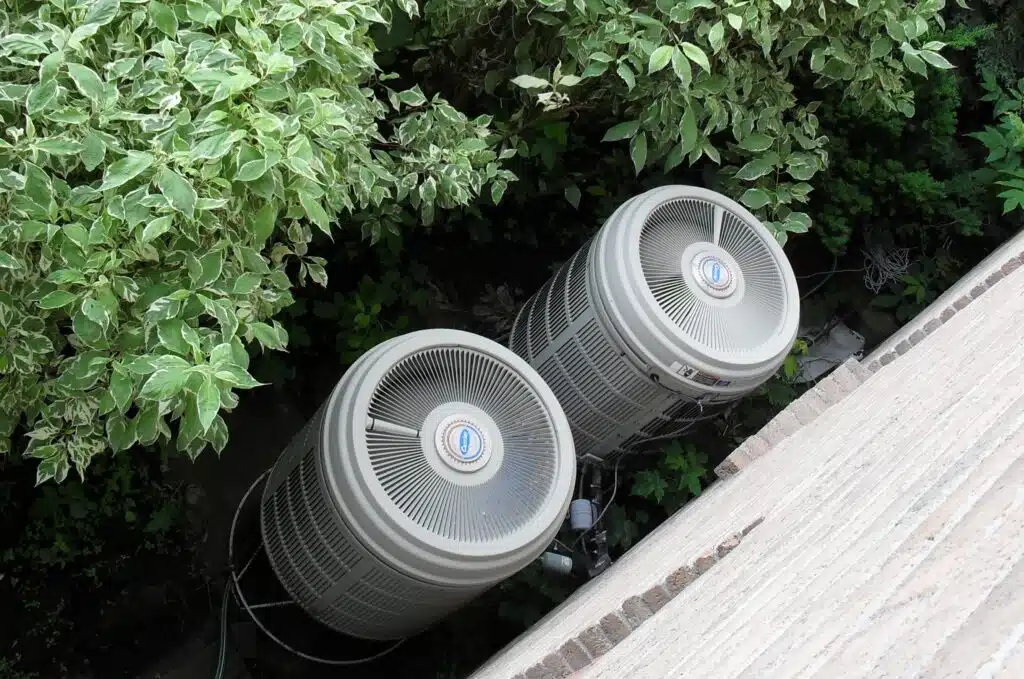
- Commercial plant: Rooftop condensers, pub beer coolers, or supermarket delivery bays.
- Topography and shielding: Embankments, cuttings, or adjacent buildings that might reflect or screen noise.
For example, on a Southwark infill site we identified that a loading bay behind a supermarket generated notable LAFmax events at 5am in the morning. This is something you would miss without reconnaissance.
2. Environmental Noise Survey
We then install Class 1 sound level meters in carefully chosen positions, normally free-field and at representative façade points. Surveys usually run for 24–72 hours, but can extend to a week if variability is high — for instance near Heathrow or Thameslink lines.
Meters are calibrated before and after deployment, with certificates appended to the report. Weather conditions (wind, rain, temperature) are logged, since gusting wind can artificially raise readings. If unusual events occur (e.g. emergency roadworks), we note and exclude them from analysis.
3. Data Capture
The raw data is where the science begins. Key metrics include:
- LAeq,16hr / LAeq,8hr: These capture average day and night noise exposure.
- LAFmax: Measures single events like train pass-bys or HGV acceleration. Councils are particularly concerned about night-time maxima disturbing sleep.
- Frequency analysis: Identifies tonal or low-frequency elements (e.g. extractor fans or bass music) that can be more disturbing than broadband noise.
We often capture 1-second or 5-minute interval data to build a time-history, showing how noise fluctuates through the day. This detail helps demonstrate to planners whether exceedances are constant or occasional.
4. Benchmarking
The measured levels are then compared to BS8233:2014 guideline values. However, comparison alone isn’t enough. We interpret results in the framework of ProPG: Planning & Noise, which sets out risk categories and encourages good acoustic design.
For example, a site in Croydon with LAeq,16hr of 68 dB clearly exceeded the BS8233 garden guideline of 55 dB. On paper it failed — but with ProPG, we could show that mitigation (barriers and orientation) reduced residual risk to an acceptable level.
5. Acoustic Modelling
For multi-storey blocks or large sites, physical measurement at every point isn’t possible. We use industry-standard modelling software to predict:
- Noise levels at upper floors.
- Shielding effects from new buildings.
- Exposure in courtyards, balconies, or gardens.
- Impact of reflective surfaces.
This modelling allows planners to see how the entire development will perform, not just the measurement points. In Greenwich, we modelled a stepped apartment block beside a dual carriageway. The upper floors were predicted to exceed BS8233 without additional glazing, so enhanced specifications were written into the design.
6. Mitigation Design
Mitigation must be proportionate, cost-effective, and buildable. Typical measures include:
- High-performance glazing: Acoustic laminates or triple-glazing to provide sufficient Rw.
- Ventilation solutions: Acoustic trickle vents, MVHR, or hybrid systems to maintain Part F compliance while keeping noise out.
- Layout strategies: Positioning bedrooms on quieter façades and living spaces on noisier elevations.
- External barriers: Close-boarded fencing, landscaped bunds, or solid balustrades for amenity areas.
The aim is always to combine approaches. For example, in a Kent housing scheme we combined fencing, rear gardens, and acoustic glazing. This kept mitigation costs manageable while achieving BS8233 targets.
7. Reporting for BS8233 Noise Assessment
The final report is the document that carries weight with planners and EHOs. A robust report will include:
- Site context.
- Survey methodology, equipment specifications, and calibration records.
- Detailed results with graphs and time histories.
- Benchmarking against BS8233 and ProPG.
- Consideration of additional guidance, standards and regulations.
- Clear description of mitigation measures.
- Policy compliance notes referencing the NPPF, London Plan, and local policies.
A well-written report gives councils confidence that the scheme will deliver suitable living conditions. In East London, a comprehensive BS8233 report allowed the council to discharge noise conditions without requesting further clarification — saving the client weeks of delay.
ProPG: Planning & Noise (2017)
ProPG was developed jointly by the Association of Noise Consultants (ANC), the Institute of Acoustics (IOA), and the Chartered Institute of Environmental Health (CIEH) to supplement BS8233. Where BS8233 sets the numerical guideline values, ProPG provides the methodology and design framework to judge whether those values can be achieved in practice.
Stage 1: Initial Risk Assessment
This is the early filter. It uses noise survey data, DEFRA noise maps or high-level scoping data to assign a site into one of three categories: Negligible/Low, Medium, or High risk. The output isn’t meant to be definitive but helps planners and developers understand the likely level of acoustic challenge, based on available data as an early indicator.
For instance, a small site off the A20 in Lewisham flagged as Medium risk under Stage 1 because the DEFRA map showed high road noise exposure. This signalled the need for detailed on-site monitoring before proceeding, in addition to a stage 2 assessment with acoustic design statement.
Stage 2: Detailed Assessment
At this stage, consultants undertake site-specific noise surveys, modelling, and mitigation proposals. The goal is to provide a planning-ready narrative that shows how risks identified at Stage 1 can be managed through good design.
Risk Categories Explained
- Low/Negligible risk: BS8233 targets can usually be achieved with conventional glazing and layouts.
- Medium risk: Acoustic design measures are essential — for example, high-performance glazing, acoustic ventilation, and careful façade orientation.
- High risk: Development is still possible but requires a robust, multi-layered acoustic strategy, often including barriers, MVHR, and extensive modelling.
Good Acoustic Design Principles
ProPG places strong emphasis on design quality, not just numbers. It encourages:
- Positioning bedrooms on quieter façades.
- Using building mass to shield courtyards and gardens.
- Ensuring ventilation strategies work when windows must remain closed.
- Balancing acoustics with daylight, overheating risk, and resident usability.
Example: A South London infill site near the South Circular was classed “Medium risk.” By locating bedrooms away from the road and specifying MVHR, we demonstrated that ProPG’s principles were met. The local authority agreed and granted consent.
Approved Document F: Ventilation
Approved Document F sets minimum ventilation rates. Where windows must stay closed for noise, alternative ventilation is required.
Options include:
- Trickle vents (often insufficient unless acoustically rated).
- MVHR systems (closed-window operation with fresh air).
Acousticians and M&E engineers must coordinate to ensure background and purge ventilation is maintained without breaching BS8233 targets. Poor coordination risks non-compliance with both acoustics and Building Regulations.
Approved Document O: Overheating
Introduced in 2022, Approved Document O addresses overheating risk in new dwellings. It intersects with acoustics:
- If windows are required for night cooling but external noise prevents opening, designs fail O.
- Mitigation includes MVHR with summer bypass, acoustic louvres, or shading.
Example: In East London, a dual carriageway meant closed windows at night. With MVHR and solar shading, we demonstrated compliance with both BS8233 and Part O.
The AVO Guide (2020)
The Acoustic Ventilation and Overheating Guide (AVO), published by ANC, IOA, and CIBSE, bridges BS8233, Part F, and Part O. Councils increasingly expect it referenced.
It outlines three scenarios:
- Open-window acceptable: quiet sites.
- Closed-window with mechanical systems: noisy façades.
- Hybrid: partial openings or acoustic louvres.
AVO provides a framework for proving both ventilation and overheating safety while meeting BS8233.
Example: A Kent housing site by a railway required closed-window bedrooms. We cited AVO guidance, recommending MVHR and screened gardens. The council discharged conditions confidently.

Real-World Case Studies
The below case study summaries provide a brief overview of how our bs8233 noise assessment process was applied to real-world schemes. You can find full, detailed previous projects here.
1. South London infill (South Circular)
Noise levels exceeded 70 dB LAeq. We specified Rw 40 dB glazing, MVHR, and solid balustrades. BS8233 targets were met and planning approved.
2. Croydon mixed-use above retail
Late-night restaurant noise threatened flats. We designed resilient separating floors and walls. ProPG principles were applied; consent followed.
3. Kent housing by railway
Gardens at 62 dB LAeq. Acoustic fencing + bund reduced to 55 dB. Outdoor amenity deemed acceptable.
4. East London office conversion
Night-time maxima >70 dB. Secondary glazing and acoustic vents achieved ≤30 dB in bedrooms. Conditions discharged.
Integrating Acoustics into Design
Acoustic strategy must be embedded early:
- Architects: façade design, bedroom orientation, courtyard layouts.
- M&E engineers: ventilation routes, MVHR performance, overheating compliance.
- Developers: weighing cost vs refusal risk.
Example: In Croydon, upgrading glazing to acoustic laminate was cost-effective compared with redesign or appeal.
Noise Assessment Planning Policy Context
- NPPF: requires noise impacts to be mitigated.
- London Plan (Agent of Change): developers must mitigate against existing noise.
- Local Plans: boroughs like Southwark, Croydon, and Lambeth reference BS8233 and ProPG directly.
Including a policy compliance table in reports often speeds officer review.
Costs, Timescales & Conditions
- Cost: £1,200–£2,500 for typical London/South East schemes.
- Survey: 1–3 days.
- Report: 1–2 weeks.
- Conditions: glazing/ventilation specs, plant noise limits, post-completion verification.
Misconceptions We Hear About a BS8233 Noise Assessment
- “Too noisy to build.” Rare. With design, compliance is usually possible.
- “BS8233 is law.” It isn’t legislation, but in practice treated as mandatory guidance.
- “Noise assessments delay planning.” Only if left late; early commissioning avoids redesign.
BS8233 Noise Assessment FAQs
How long does an assessment take?
1–3 days monitoring; 1–2 weeks reporting.
Do small schemes need a bs8233 noise assessment?
Yes, if near busy transport or noisy neighbours, you will need a bs8233 noise assessment.
What if the site ‘fails’?
The assessment doesn’t result in a ‘pass’ or ‘fail’. If it is decided that the proposed scheme is exposed to high levels of noise; mitigation is designed until internal noise level targets are met.
How much does a bs8233 noise assessment cost?
£1,200–£2,500, more for complex multi-block schemes.
Does a BS 8233 assessment apply to schools/offices?
Yes, though schools primarily use BB93 and offices have separate standards.
How does overheating interact?
Part O of the building regulations requires safe night cooling. If windows can’t open, MVHR or shading must be provided.
What’s the role of the AVO Guide?
It shows how to integrate acoustics with Parts F and O — increasingly cited by councils.
Can conditions be discharged later?
Yes, but councils prefer evidence upfront to avoid refusal, unnecessary costs and delays.
What about outline applications?
A scoping or risk-based assessment can be provided, with full BS8233 work reserved for detailed design.
What about appeals?
Noise is a common reason for refusal. Having a BS8233 report upfront strengthens appeals and reduces risk.
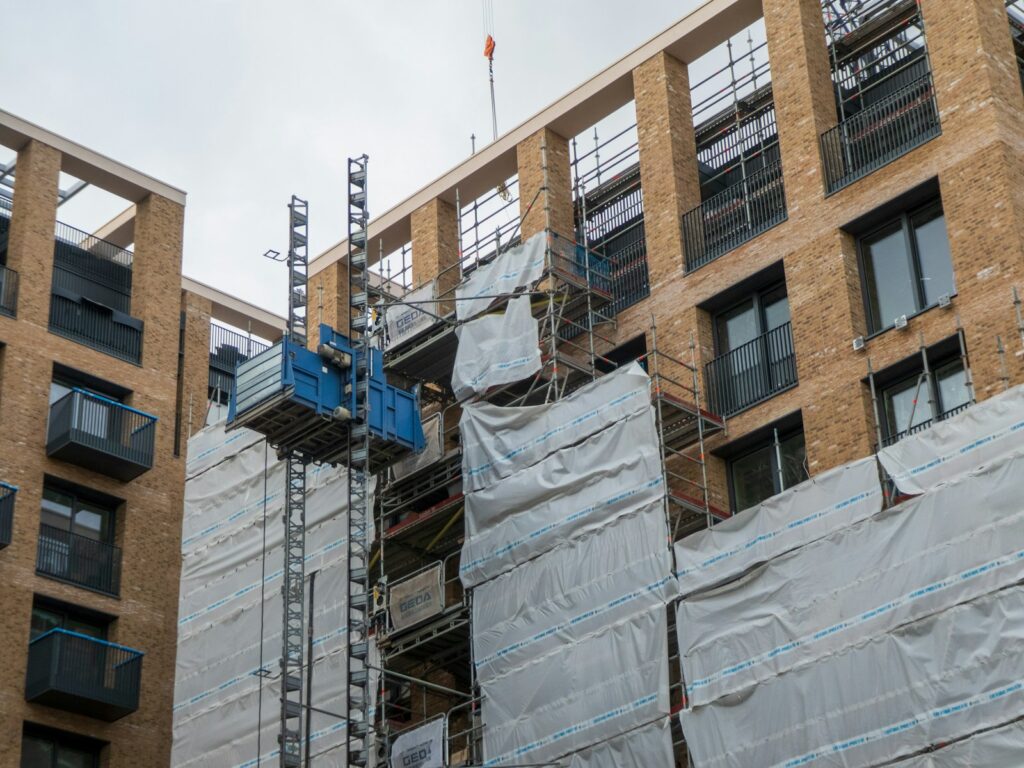
Conclusion | BS 8233:2014 Noise Assessments
A BS8233 noise assessment is more than a technical requirement. It is evidence that a scheme will deliver healthy, liveable homes. Integrated with ProPG, Approved Document F, Approved Document O, and the AVO Guide, it reassures councils that developments are not just compliant but comfortable.
Across London and the South East, we’ve seen strong schemes succeed by addressing noise early: from South London infills and Croydon mixed-use to Kent housing and East London conversions. With the right acoustic strategy, compliance is always achievable.