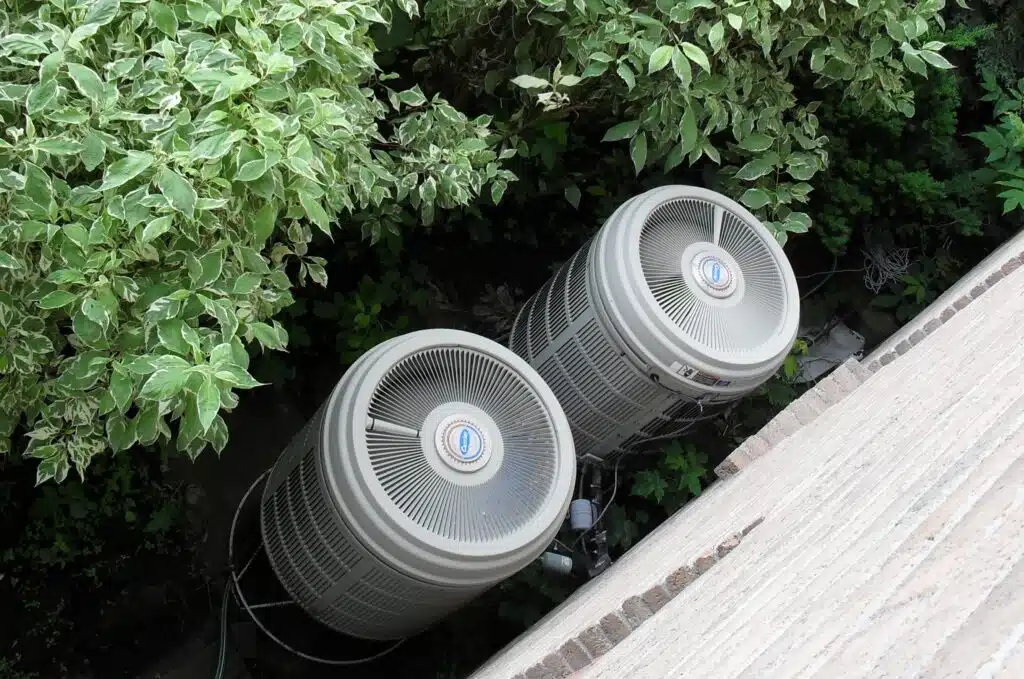
Noise surveys and noise monitoring are essential for demonstrating compliance with UK noise standards, planning policies, and environmental regulations. How often is a noise survey required for planning applications in the UK? Well… a noise survey typically measures existing sound levels to support a planning or design process.
There’s no single rule for how often these assessments must be carried out. The frequency depends on their purpose: whether it’s for a planning application under BS 8233, a plant noise assessment under BS 4142, construction site monitoring under BS 5228, or a workplace noise survey under the Control of Noise at Work Regulations 2005.
In this guide, we explain how often noise surveys and monitoring are required in each scenario. From new developments and operational sites to construction projects and occupational settings.
What Determines How Often is a Noise Survey Required?

The frequency of a noise survey or noise monitoring exercise depends largely on the type of development, the level of operational noise risk, and any specific conditions imposed by the local planning authority. In some cases, surveys are required just once to establish a baseline before planning approval; in others, ongoing monitoring may be necessary to demonstrate continued compliance or to respond to potential complaints.
A one-off baseline noise survey is usually carried out before a new development or change of use, helping to quantify existing background levels and inform design measures. By contrast, ongoing noise monitoring may take place over several days, weeks, or months — particularly where construction, demolition, or industrial operations could impact nearby sensitive receptors.
In practice, the timing and frequency of assessments can be grouped into four broad categories:
- Planning and development
- Construction and demolition
- Operational or industrial premises
- Workplace and occupational noise monitoring
Each scenario has its own standards, methods, and expectations, explored in the following sections.
Planning & Development — Before and After Permission
For new residential or mixed-use developments, noise surveys are typically required at the planning stage to demonstrate compliance with BS 8233:2014 (Guidance on sound insulation and noise reduction for buildings) and the ProPG: Planning & Noise (2017) framework. These standards ensure that future residents enjoy acceptable internal and external noise levels, forming a key part of the planning decision process.
A baseline noise survey is usually undertaken before submitting a planning application, measuring existing environmental sound levels over a representative period (typically 24 hours). The results inform the Noise Impact Assessment, which identifies appropriate glazing, ventilation, or façade treatments.
Once planning permission is granted, a follow-up or verification survey may be required to discharge specific acoustic conditions. These are often referred to as post-completion or compliance noise surveys, confirming that the development performs as predicted.
Additional surveys may also be triggered by layout amendments, changes to façade design, or alterations to fixed plant or mechanical ventilation systems. Each of these can affect the predicted internal noise levels and therefore require re-assessment.
At Polaris Acoustics, we regularly support architects and developers through every stage of this process — from pre-application baseline surveys to condition discharge and post-completion verification. Learn more on our dedicated Noise Impact Assessment for Planning page.
Operational or Industrial Premises — Periodic or Trigger-Based Monitoring
For operational or industrial premises, noise monitoring frequency is guided by BS 4142:2014+A1:2019, which assesses the impact of industrial and commercial sound on nearby residential receptors. Unlike one-off planning surveys, these assessments are often repeated periodically to confirm ongoing compliance — particularly where sites operate continuously or have equipment that may alter over time.
Some local authorities and Environmental Permits (regulated under the Environmental Permitting Regulations) specify annual or bi-annual noise checks, especially for facilities such as factories, refrigeration units, distribution hubs, or external mechanical plant. Regular surveys help demonstrate that operations remain within permitted noise limits and that tonal, impulsive, or intermittent characteristics have not increased.
You should consider repeating a noise survey or monitoring programme whenever any of the following occur:
- Significant change in equipment or process
- Alteration to operating hours or throughput
- Noise complaints from neighbouring properties
- Formal request from the local authority or regulator
Carrying out proactive monitoring helps reduce the risk of enforcement action or reputational harm, while providing clear evidence of acoustic due diligence under BS 4142 principles.
How Often is a Noise Survey Required for Construction and Demolition Sites
During construction and demolition, noise monitoring is often required to comply with BS 5228-1:2009+A2:2022 (Code of practice for noise and vibration control on construction and open sites) and the Control of Pollution Act 1974 (Section 61). The frequency of monitoring varies depending on the project’s scale, proximity to sensitive receptors, and any conditions set by the local authority.
Monitoring may be continuous, weekly, or event-triggered — for example, when specific activities such as piling, breaking, or heavy demolition are taking place. A well-designed programme usually includes three key stages:
- Baseline monitoring before works – to quantify existing ambient conditions and inform Section 61 consent applications.
- Ongoing monitoring during construction – to demonstrate compliance with agreed noise limits and provide evidence if complaints arise.
- Verification or validation after completion – confirming that post-works noise levels have returned to acceptable levels.
Two main approaches are used: short-term attended measurements, which capture specific activities in real time, and long-term unattended systems, which continuously log data and send automated alerts if thresholds are exceeded.
At Polaris Acoustics, we provide both automatic remote monitoring systems and attended site inspections, using Class 1 instrumentation to BS 61672 for reliable, traceable results throughout the entire construction cycle.
Workplace & Occupational Noise Monitoring

In occupational settings, noise surveys are required to comply with the Control of Noise at Work Regulations 2005, which protect employees from long-term hearing damage caused by excessive exposure. Employers must carry out a Noise at Work Assessment whenever there is a risk that daily or weekly exposure may exceed the Lower or Upper Exposure Action Values (80 dB(A) and 85 dB(A)).
Typically, workplace noise monitoring is repeated every two to three years, or sooner if there is any change in equipment, process, layout, or working pattern that could alter noise exposure levels.
Two primary methods are used:
- Personal dosimetry, where small meters worn by employees record real exposure over a working shift.
- Static area surveys, which measure noise levels in specific zones or near machinery to assess compliance with exposure limits.
Regular monitoring not only ensures compliance with the Health and Safety Executive (HSE) requirements but also demonstrates a proactive commitment to employee wellbeing and safe working conditions.
Complaint-Driven or Enforcement-Based Surveys
Sometimes, noise monitoring is required reactively, following complaints from nearby residents or businesses. Local authorities have a duty under the Environmental Protection Act 1990, particularly Section 79–81, to investigate potential statutory nuisances such as excessive noise. Under Section 81, if a nuisance is confirmed, the authority must serve an abatement notice, requiring the operator or landowner to reduce the noise to an acceptable level.
In these cases, surveys are usually one-off investigations, but may need to be repeated if problems persist or if mitigation works are carried out and need verification. Typical sources include restaurant or bar extract systems, air-source heat pumps, refrigeration plant, and industrial processes.
Commissioning an independent BS 4142 noise assessment can help resolve disputes quickly, demonstrate proactive management, and prevent enforcement escalation. Well-documented evidence from calibrated noise monitoring supports both Environmental Health Officers and site operators in reaching a fair and defensible outcome.
Summary — How Often Is a Noise Survey Required?
While there is no single rule for how often noise monitoring is required, most situations follow well-established patterns based on UK standards and good acoustic practice. The table below provides a quick reference guide:
| Scenario | Typical Frequency | Relevant Standard / Guidance |
|---|---|---|
| Residential Planning | Once per development stage (baseline and post-completion) | BS 8233, ProPG |
| Industrial / Plant Noise | After major change in equipment or complaint | BS 4142 |
| Construction / Demolition | Continuous, weekly, or trigger-based monitoring | BS 5228 |
| Workplace Noise | Every 2–3 years, or following process changes | Control of Noise at Work Regulations 2005 |
| Complaint Investigation | As required by Environmental Health or Section 81 enforcement | BS 4142 / EPA 1990 |
Understanding where your project sits in this framework helps avoid delays, ensures compliance, and supports ongoing environmental best practice.
Why Regular Noise Monitoring Matters
Regular noise surveys and environmental monitoring are essential for maintaining compliance, protecting amenity, and preventing enforcement under the Environmental Protection Act. By identifying potential noise risks early, developers and operators can implement cost-effective mitigation measures and demonstrate a clear commitment to good acoustic design.
From a planning perspective, proactive monitoring can help avoid objections, discharge conditions more efficiently, and ensure that the development remains compliant throughout construction and operation. For existing businesses, it provides an auditable record of acoustic due diligence, reducing the likelihood of statutory nuisance complaints.
To explore the relevant methodologies in more detail, see our dedicated pages on BS 4142 Noise Assessments and Construction Noise Monitoring.
How Polaris Acoustics Can Help

At Polaris Acoustics, we provide both one-off and ongoing noise monitoring solutions across the South East and Greater London (as well as across the UK), supporting developers, contractors, and local authorities with precise, defensible data.
Our consultants use IEC 61672 Class 1 ACOEM Fusion monitoring equipment with 4G remote access, ensuring real-time accuracy and complete traceability to BS 61672. Whether you need short-term attended surveys for planning or continuous unattended monitoring for construction and operational compliance, we tailor each deployment to meet the relevant standards and site constraints.
Contact us today for expert advice or a detailed quotation, and discover how proactive noise monitoring can simplify compliance while protecting both people and place.
FAQs
How long does a noise survey take?
Most environmental and planning noise surveys run for at least 24 hours to capture representative daytime and night-time conditions. However, longer measurements (up to a week or more) may be required for complex or variable noise environments.
Can noise monitoring be done in winter or rain?
Yes, noise surveys can be conducted year-round, but heavy rainfall or strong winds can affect data quality. Experienced consultants will apply appropriate weather exclusions and schedule measurements under suitable meteorological conditions, following BS 7445 and BS 4142 guidance.
Do councils require repeat surveys?
Many planning authorities request follow-up or verification surveys to confirm compliance (such as with BS 8233) once a development is complete. In some cases, councils also require periodic monitoring for operational or industrial sites where plant or process noise may vary over time.