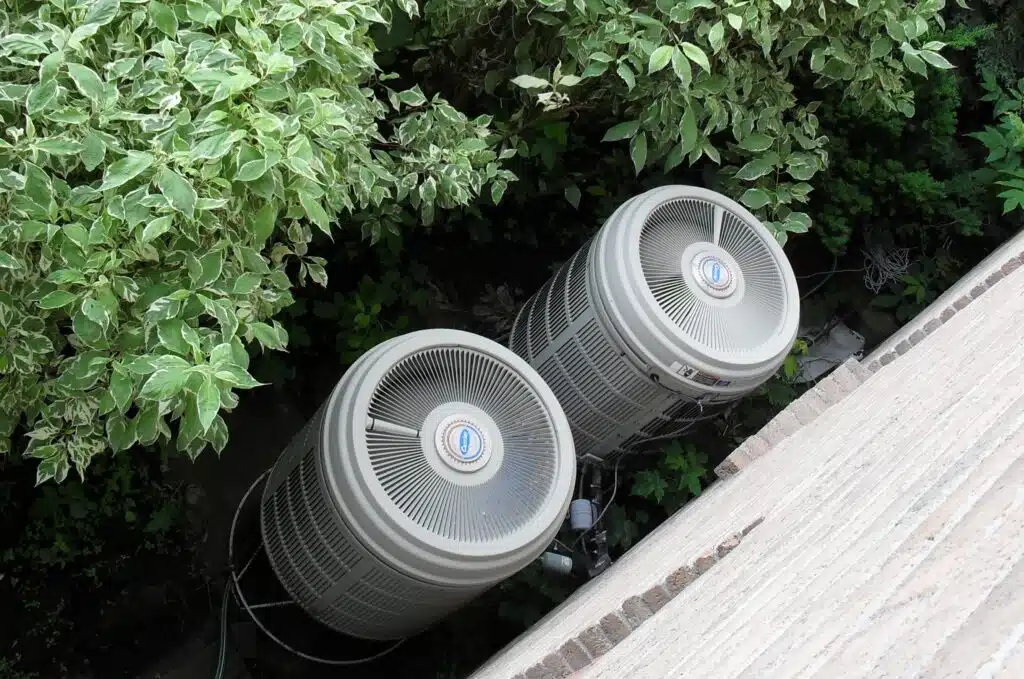
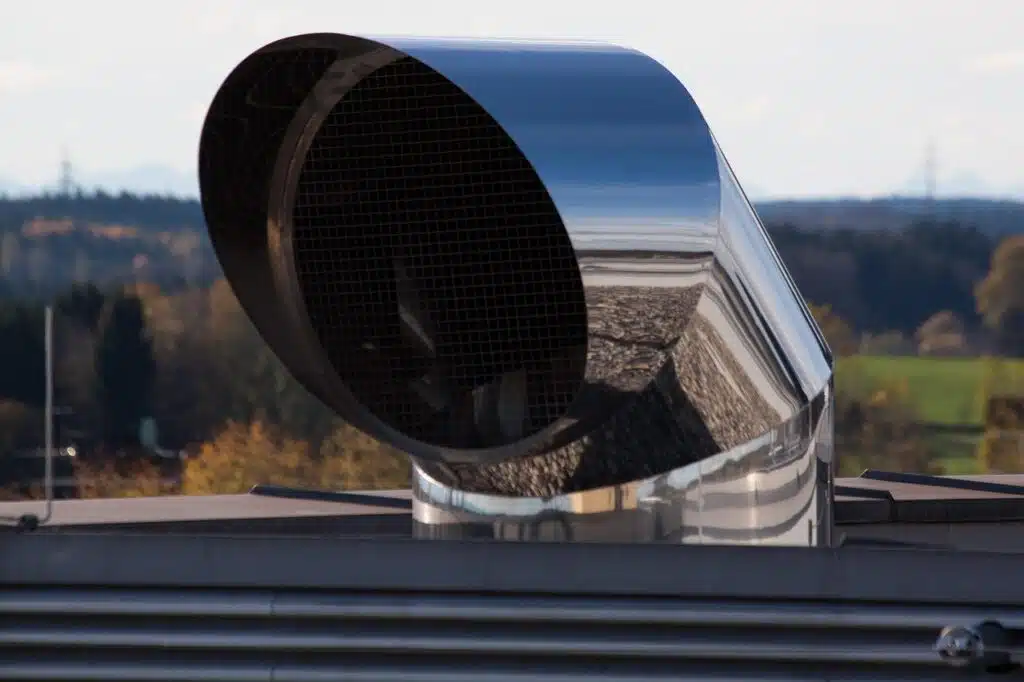
Want to know how a noise impact assessment helps new urban developments to achieve planning success? To set the scene, imagine a mixed-use scheme with noise sensitive receptors nearby and within the development itself. The architects need to consider externally located condenser ASHP units and a kitchen extract fan. But… it’s noisy. How can a local planning authority make sure that such a proposed scheme does not adversely affect the amenity of those nearby noise sensitive premises?
The answer necessitates a comprehensive consideration of the cumulative noise impacts on those receptors. This is usually done by submitting a Noise Impact Assessment that is prepared by a ‘suitably qualified’ professional acoustics consultant, who is also normally a full ‘corporate’ member of the Institute of Acoustics (MIOA).

What is a Noise Impact Assessment?
The term, ‘Noise Impact Assessment‘, commonly abbreviated to just ‘NIA’, is a vague descriptor that simply refers to an assessment of any impacts that a noise source noise might have on a noise sensitive receptor. This may include BS 8233-style noise assessments that consider the effects of road traffic noise on a new residential scheme.
In planning and acoustics, Noise Impact Assessments typically refer to a BS 4142-style noise assessment instead. This is when we need to consider noise generated by a development and how this might result in effects on the nearest noise sensitive receptors (NSRs).
We complete these assessments to avoid complaints of noise to the local planning authority’s environmental health department. More importantly, we ensure the amenity of nearby noise-sensitive receptors are protected.
In some areas, such as the London Borough of Camden or Westminster, the local planning authority may require criteria referencing the methodology of BS 4142. However, these criteria might necessitate a more stringent assessment to prevent a phenomenon known as ‘background creep’.
A flaw with BS 4142 is that it simply requires the rated specific sound level of the specific noise source(s) to be below the representative (or in some cases, minimum) measured background sound level, obtained from a baseline noise survey. Overtime, and with high density development areas, the low level plant or commercial sound can slowly sum together; resulting in an increase in the background sound levels (LA90). So local authorities aim to resolve this by requiring plant noise to be at least 10 to 15 dB below the background sound level. This helps to provide a buffer, which prevents background creep.
Why Urban Developments Need a Noise Impact Assessment?
In urban areas, developments are faced with significant challenges and constraints. For example, mixed-use schemes may feature busy restaurants beneath flatted dwellings and rooftop plant, air handling units and air source heat pumps can generate structure-borne sound and vibration.
Noise impact assessments considers all sources of noise generated by a development and how this could impact the nearest noise sensitive receptors. The assessments can also provide tailored information for the best cost-benefit ratio when incorporating mitigation measures.
Some assessments however, may simply establish that a noise-generating scheme might not result in any impacts on the nearest noise sensitive receptors. But the end goal is the same, to quantify the impacts of noise and if there are impacts, to establish how these impacts may be avoided, mitigated or reduced to a minimum.

A Key Environmental Constraint in City Planning
In planning, it is beneficial to think of a Noise Impact Assessment as a proactive tool instead of a compliance chore. Why? Simply put, a NIA helps you achieve the following:
- Strengthens your planning submission by addressing Environmental Health queries up front.
- A detailed Noise Impact Assessment can reduce the number of planning conditions, such as by removing any requirements for post-installation verification testing.
- The acoustic impact assessment can also significantly reduce submission delays, particularly for urban developments. At Polaris Acoustics, we commonly get asked by clients to conduct a Noise Impact Assessment after advice from an Environmental Health Officer (EHO), typically as a response to an application not including an assessment of the noise impacts by default.
- Demonstrate design due diligence (important when considering the NPPF and NPSE), and if completed at an early stage, can help to implement mitigation within the costs of the proposed scheme, rather than mitigation forcing additional costs onto the developer and eventually onto the future occupiers of the proposed scheme.
- Supports sustainable design with better acoustic environments. This means healthier and more desirable developments. This can be a very important piece of contextual detail, which can help the proposer appear better-considerate of the potential effects of a development upon the nearest sensitive premises.
It is also prudent to note that LPAs have increasingly more stringent considerations of the environmental impacts of a proposed scheme. And therefore, it is increasingly common for developments that have a potential for adverse impacts on the nearest noise sensitive premises to need a noise impact assessment. This is often dictated by local planning policies, typically outlined in local plans, such as the London Plan.
Urban Developments and their Challenges in Planning and Design
Urban developments feature a number of challenges. In particular, we frequently see three key areas that are common with many urban developments.
1. Mixed-Use Urban Developments
Town centre, and city projects frequently provide multiple uses within a single scheme. This might include a combination of residential, commercial and leisure. In London, it is increasingly common for developments to feature both residential and office space. Without careful design and planning, noise from the commercial uses can often impact not only the adjacent residential uses, but also the proposed residential units of the mixed-use scheme itself.
The solution: By commissioning a noise impact assessment, this helps to clearly define operational noise and the likely impacts on the nearest noise sensitive receptors whilst also considering operational hours. This helps to optimise the design of a scheme, and implement mitigation measures to avoid planning delays.
2. Planning Conditions and Objections
After air quality, noise concerns are one of the most common sources of planning objections. Even after gaining consent, a local planning authority may still impose restrictive conditions that require excessive mitigation or further evaluation of the noise impacts.
The solution: A detailed acoustic impact assessment delivered to the LPA upfront, and with the planning application helps to anticipate any noise-related concerns and propose reasonable, evidence backed mitigation strategies which can be implemented with reasonable costs.
3. Rooftop Plant and Building Services
Urban developments, particularly in London, will include building services plant that can generate noise. This might include rooftop air conditioning units or heat pumps, or even large air handling units and ducting. This can potentially significantly and adversely impact both existing and proposed residential dwellings.
The solution: Predictive noise modelling as part of the noise impact assessment process ensures that building services meet agreed and established criteria which helps to avoid nuisance and potential breaches to local and national planning policy.
What’s Included in a Professional Noise Impact Assessment
Break this into subsections for readability:
- Baseline survey — representative day/night measurements using Class 1 equipment.
- Modelling and prediction — use of manufacturer sound data, 3D acoustic modelling, or simplified calculations.
- Assessment — comparison of rating levels vs background (BS 4142); context analysis.
- Mitigation — quiet plant selection, barriers, attenuators, layout optimisation, time controls.
- Reporting — plain-English conclusions, drawings, and compliance tables for submission.
Include a small diagram or graphic showing this workflow.
Case Example – City of London
A recent site in the City of London required the consideration of rooftop air source heat pumps as part of a conversion from offices to residential with retained ground floor office use. Initially modelling of the sources, receptors and paths of propagation in accordance with ISO 9613-2:2024 identified that the specific sound level would have exceeded a level that is 10 dB below the background sound level by approximately 3 dB.
The solution was to relocate the plant on the rooftop, and make use of the existing geometry of the building. This helped to reduce the specific sound level of the plant by approximately 12 dB to the nearest noise sensitive receptors.
This solution allowed the client to explore higher capacity ASHP units manufactured by Mitsubishi Electric and Daikin, which would provide improved cooling and heating capabilities. The end result not only satisfied the council’s criteria, but also led to no objections and no conditions requiring further assessment or mitigation.
Practical Takeaways for Developers
There are a number of practical takeaways and recommendations for developers, based on our experience with clients, both present and past at Polaris Acoustics.
1. Engage early
Whilst we are in the business of providing acoustic assessments and get paid for doing this, despite this fact, it is ALWAYS important to engage an acoustic consultant early. AT LEAST, this should be before finalising layouts and/or plant selection.
At Polaris Acoustics, it is too often that we see developers try to cut costs by not instructing a suitably qualified acoustics consultant to complete a Noise Impact Assessment, to simply spend money and time submitting an application, for that application to take months for a decision which is normally refused because there wasn’t an environmental noise assessment or noise impact assessment.
This then costs more, as the survey needs to be conducted, but at the expense of (in some instances) needing to submit a second application with a completely revised scheme. This costs significant amounts of time and money, both of which are precious resources in the world of planning and developments.
2. Use the Noise Impact Assessment as a Design Tool
This point is self explanatory, but the noise impact assessment is often passed off by developers and architects as something that is unnecessary or is just causing bloat to the application process.
But in fact, developers can take advantage of the expertise of an acoustic consultant and the noise impact assessment process to better understand where their development stands in regards to the levels of noise (both ingress and egress), and then can make decisions where form follows function.
A simple example, is that a recent site that Polaris Acoustics had worked on this year featured potential noise impacts due to the positioning of air handling units. The noise impact assessment process helped to identify the optimal location for these AHUs. This saved significant costs and time in finding more quiet AHU plant, but also saved costs on potential enclosures and barrier options to mitigate the sound.
In the end, the cost of the assessment and consideration of different locations for the plant was far less than the potential costs of enclosures and acoustic barriers.
At Polaris Acoustics, we can also engage directly with your architect and MEP engineers to find optimal solutions should noise impacts be identified.
3. Treat Noise as Part of Sustainability and ESG Agenda
By treating noise as part of your sustainability/ESG agenda, this helps to not only ensure good acoustic design, but also enhance occupant wellbeing, protect community amenity, and demonstrate responsible development practice. It shows that your project considers not just compliance, but the long-term social and environmental impacts of sound, creating spaces that are quieter, healthier, and more enjoyable to live and work in.

FAQs
When is a Noise Impact Assessment Required?
If you believe that your development includes noise-generating plant, equipment or commercial or industrial uses adjacent to any nearby noise sensitive receptors, then you will probably need a noise impact assessment for your development to comply with local and national planning policy.
What Standards are Used?
For a typical Noise Impact Assessment, we typically consider BS 4142, with BS 5228 for construction noise and BS 8233 when considering any internal design criteria. Where sources (such as from sports activities) fall outside the scope of BS 4142 and BS 5228, we typically consult the 2014 IEMA Guidelines for Environmental Noise Impact Assessment.
Will a Noise Impact Assessment Delay My Application?
No. Completing a Noise Impact Assessment early, ideally before finalising the site layout and plant selection, can help avoid delays in obtaining planning consent. By identifying potential noise issues at an early stage, you can address them within the design and provide clear evidence to the Environmental Health Officer, reducing the likelihood of objections or additional planning conditions.
How Long Does It Take?
Typically within 2-3 weeks of Polaris Acoustics receiving your instruction, subject to necessary information about your development being available and also subject to access if a baseline noise survey is necessary.
How Much Does a Noise Impact Assessment cost?
For desktop-only assessments, such as if baseline data is already available, fees typically start at £800-1200. If the scope of works includes a baseline noise survey, then prices will typically start at £1200–3200+ depending on the size of your site, location, complexity of the project, number of receptors to consider.
If you are unsure, please do contact us for a free and non-obligatory quotation.
Need a Clear & Comprehensive Noise Impact Assessment for Your Next Scheme?
Contact us today for professionally prepared noise impact assessments to support you next planning application and protects the amenity of the nearest noise sensitive premises.