Planners and design teams risk late objections, ineffective or excessive mitigation solutions and redesign when noise isn’t quantified early. The outcome they want is simple: evidence that satisfies planning, protects amenity and leads to buildable detail. This article shows how a Noise Survey Report does exactly that with clear methods, realistic targets and practical mitigation solutions.
A Noise Survey Report measures environmental sound, compares it with UK guidance (e.g., BS 8233, BS 4142) and turns results into façade, ventilation and plant limits as well as recommendations for noise solutions. After all, if done early—it de-risks consent and speeds decision making.
What is a Noise Survey Report?
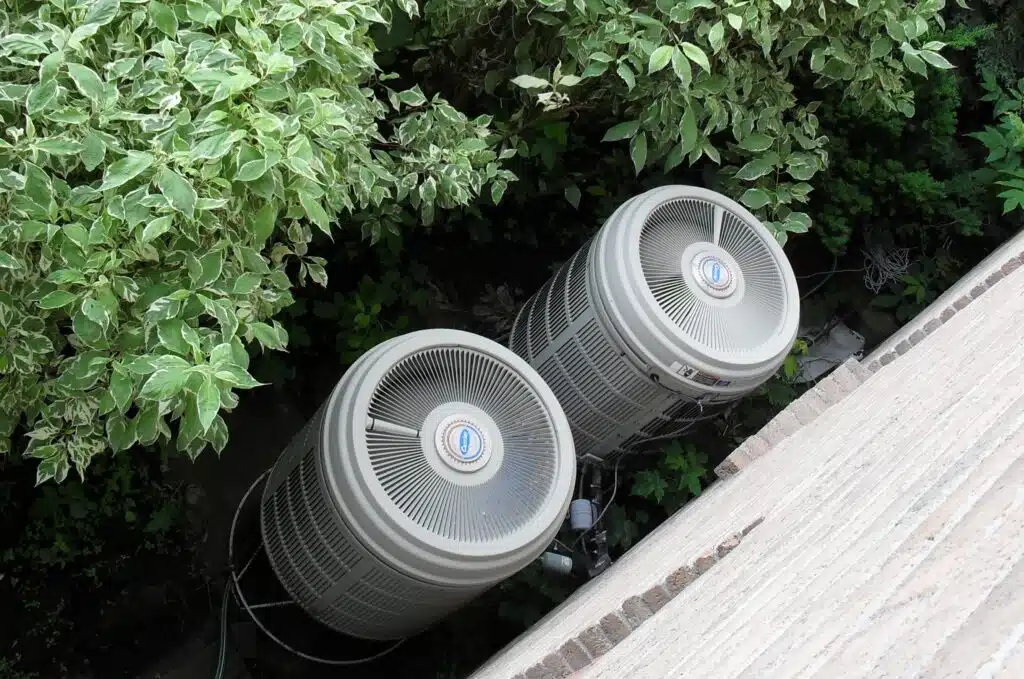
A Noise Survey Report documents measured sound around a site and explains what it means for planning and design. Typically, it’s requested near busy roads, rail, flight paths or industry, or where fixed plant (heat pumps, AHUs, condensers) might affect neighbours. Furthermore, it’s also common for condition discharge or Environmental Statements.

What the Noise Survey Report Includes (in Plain English)
- Scope & brief: planning ask, receptors, periods and sources.
- Methodology and Relevant Documentation: provides assessment criteria and literature context.
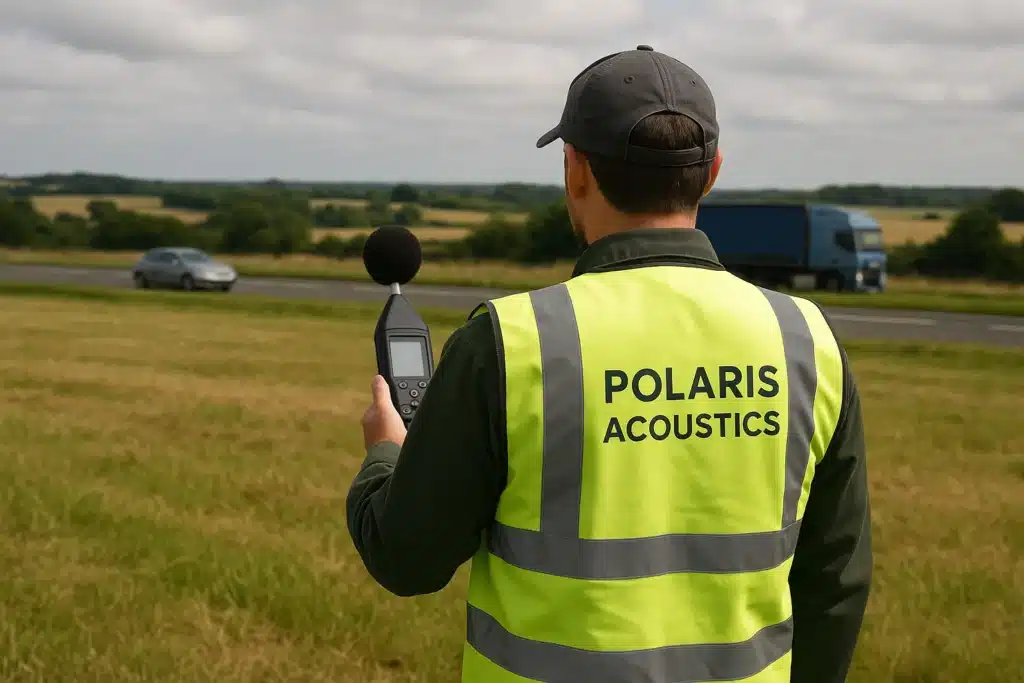
- Monitoring: Class 1 (IEC 61672-1) kit, field calibration checks, secure weatherproof mounting.
- Results: LAeq,T, LAFmax at night, and LA90 where background matters.
- Assessment: the right benchmark for the question (e.g. new dwellings, plant or construction).
- Design translation: glazing/ventilation specification, plant noise limits, and construction controls.
- Mitigation & residual risk: options with pros/cons, written for non-acousticians.
Picking the Right Benchmark (and Why)
Residential internal and external amenity – BS 8233:2014
Designers commonly aim for 35 dB LAeq,16h in living rooms by day, 30 dB LAeq,8h in bedrooms at night, and up to 50–55 dB LAeq,16h for gardens/balconies. Accordingly, these values frame façade performance and ventilation strategy.
Industrial or plant to neighbours – BS 4142:2014+A1:2019
This method compares the Rating level of the specific source with representative LA90 background level. Before this, tonal, impulsive or intermittent features add rating penalty corrections to the Specific (measured) sound level. In summary, the difference, plus context, indicates likely impact and sets commissioning limits at façades.
Construction stages – BS 5228-1:2009+A1:2014
The BS 5228 code of practice supports prediction, solutions and management of site noise, helping agree hours, sequencing, monitoring and neighbour communications in a Construction Environmental Management Plan (CEMP).
Planning context – ProPG: Planning & Noise (2017)
Risk screening and an Acoustic Design Statement encourage coordination of layout, massing, façade and ventilation early, not as a late patch.
Health evidence – WHO Environmental Noise Guidelines (2018)
Useful context for transport/amenity discussions. While it’s not the planning test, it explains why quieter outcomes matter. The document will however, be more relevant for future assessments based on the revised version of BS 8233.
Overheating Interaction – Approved Document O & ANC Guidance
Since overheating strategies can rely on open windows, Approved Document O and the ANC ADO Noise Guide help teams balance ventilation with acoustic targets in dense or “high risk” noisy settings.
How the Noise Survey Report is Done (and How Long It Takes to Get the Report)
Desk study first. Receptors and sources are mapped, local policy and any conditions reviewed, and a monitoring plan agreed.
Monitoring next. Positions are chosen at representative façades and free-field points, typically 1.5–4 m AGL. Accordingly, durations are often 24–72 hours; longer runs help where weekends or atypical operations matter. For this reason, Class 1 meters to IEC 61672-1 with acoustic calibrators are used, with drift checks logged.
Assessment and design. External levels are translated into internal targets within dwellings, then into composite Rw/ Rw+Ctr requirements and ventilation noise checks. Additionally, for plant, BS 4142 rating and context inform a commissioning limit. Accordingly, for construction, BS 5228-1 guides methods and community measures.
Practical Mitigation with Real Trade-offs
- Layout & massing. Place circulation and less sensitive rooms on noisier sides to shield bedrooms and living rooms. Accordingly, this often reduces glazing cost and reliance on mechanical systems.
- Façade design. Specify glazing/frames for the composite Rw+Ctr; address flanking so headline values translate to rooms.
- Ventilation. Where open-window operation isn’t realistic, consider acoustic ventilators or MVHR with summer bypass. Fan noise must be low, and maintenance practical.
- Outdoor amenity. Create a quiet side for private spaces or use solid screens and well-placed wintergardens. Moreover, predictions should show outcomes, not just intentions.
- Plant selection & controls. Choose quieter models, add attenuators and apply night-time setbacks. Accordingly, commissioning should verify limits at the relevant façades.
- Construction management. Time the loudest tasks for acceptable windows, add temporary enclosures and keep neighbours informed.
Short Scenarios for Noise Survey Reports
Mixed-use over retail plant. Daytime background is 42 dB LA90. A 39–42 dB rated level at the nearest façade is typically low impact with BS 4142 once context is considered; a compact silencer avoids oversized screens or other unnecessary noise mitigation solutions.
Apartments beside an A-road. External noise sits around 68 dB LAeq,16h by day and 61 dB LAeq,8h at night. Composite façades in the 37–40 dB Rw+Ctr range, paired with MVHR, meet BS 8233 internally. Lastly, courtyard balconies target ~55 dB LAeq,16h.
Phased regeneration—demolition to build. BS 5228-1 predictions frame respite periods for high-noise tasks and trigger levels for monitoring. Complaints fall when residents know the schedule, this provides effective solutions for construction-related noise impacts.
Noise Survey Costs, Report Timing and Deliverables
Timing. Allow a week for scoping and kit logistics, 2–3 days of monitoring on straightforward sites, and 5–10 working days for analysis/reporting once inputs are complete. That is to say, more time may be needed for workshops or iterations.
Deliverables.
- A concise main report with methods, photos, calibration records and results.
- A one-page Acoustic Design Statement for planners.
- A specification schedule (e.g. glazing, ventilation and plant limits) that is lift-and-place for tender.
Next steps. Prefer a done-for-you package? For scope and fees, speak to an acoustic engineer.
FAQs
What does a Noise Survey Report cost?
It depends on complexity and duration. Therefore, a simple plant compliance check may sit in the low four figures. However, multi-position baselines with BS 4142 and BS 8233 assessment reports will be higher. That is to say, a clear brief and early access help control costs.
How long should monitoring run?
Long enough to represent typical conditions. For steady transport or straightforward plant, 24–48 hours often suffices. Another key point, add days where weekends, curfews or unusual operations drive the risk.
Can openable windows still be used near busy roads?
Often, yes, but design must show how acoustics and overheating requirements are balanced. Approved Document O and ANC guidance are helpful here. If open-window use isn’t realistic, acoustic ventilators or MVHR with summer bypass provide alternatives.
Will WHO guideline numbers block a scheme?
No. They provide health evidence and context. Generally speaking, UK planning decisions typically rely on BS 8233, ProPG and BS 4142. After all, good acoustic design that meets those documents is the usual pathway.
Summary – Noise Survey Report
In short, a Noise Survey Report quantifies risk early, aligns proposals with BS 8233 for internal amenity, BS 4142 for plant, and BS 5228-1 for construction, and explains noise solutions clearly for planners. That combination speeds consent and builds comfort into the scheme from day one.