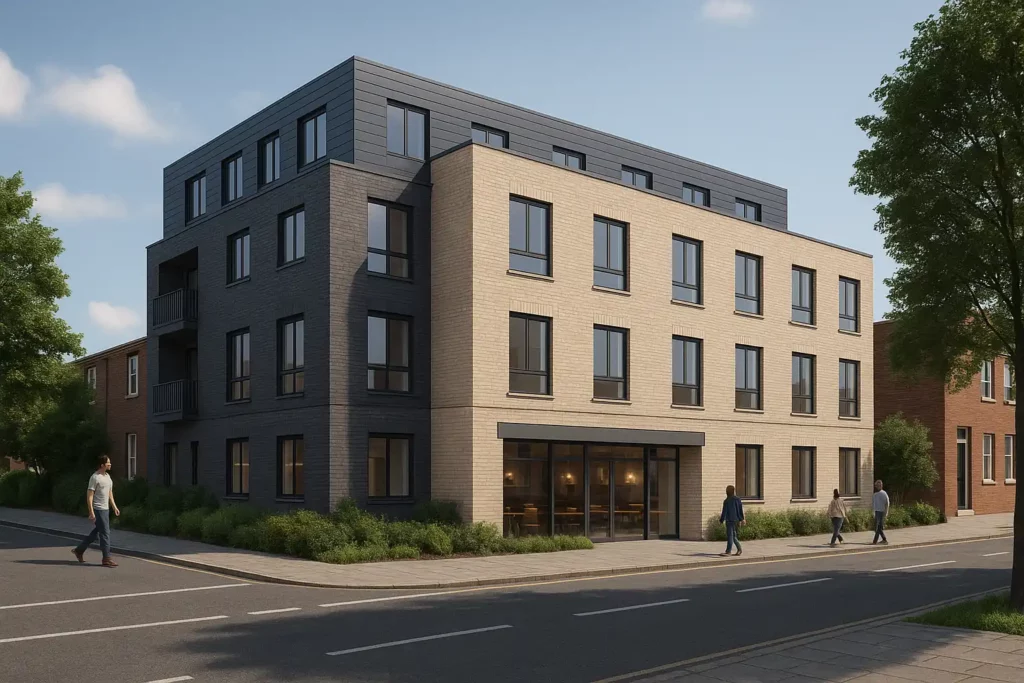
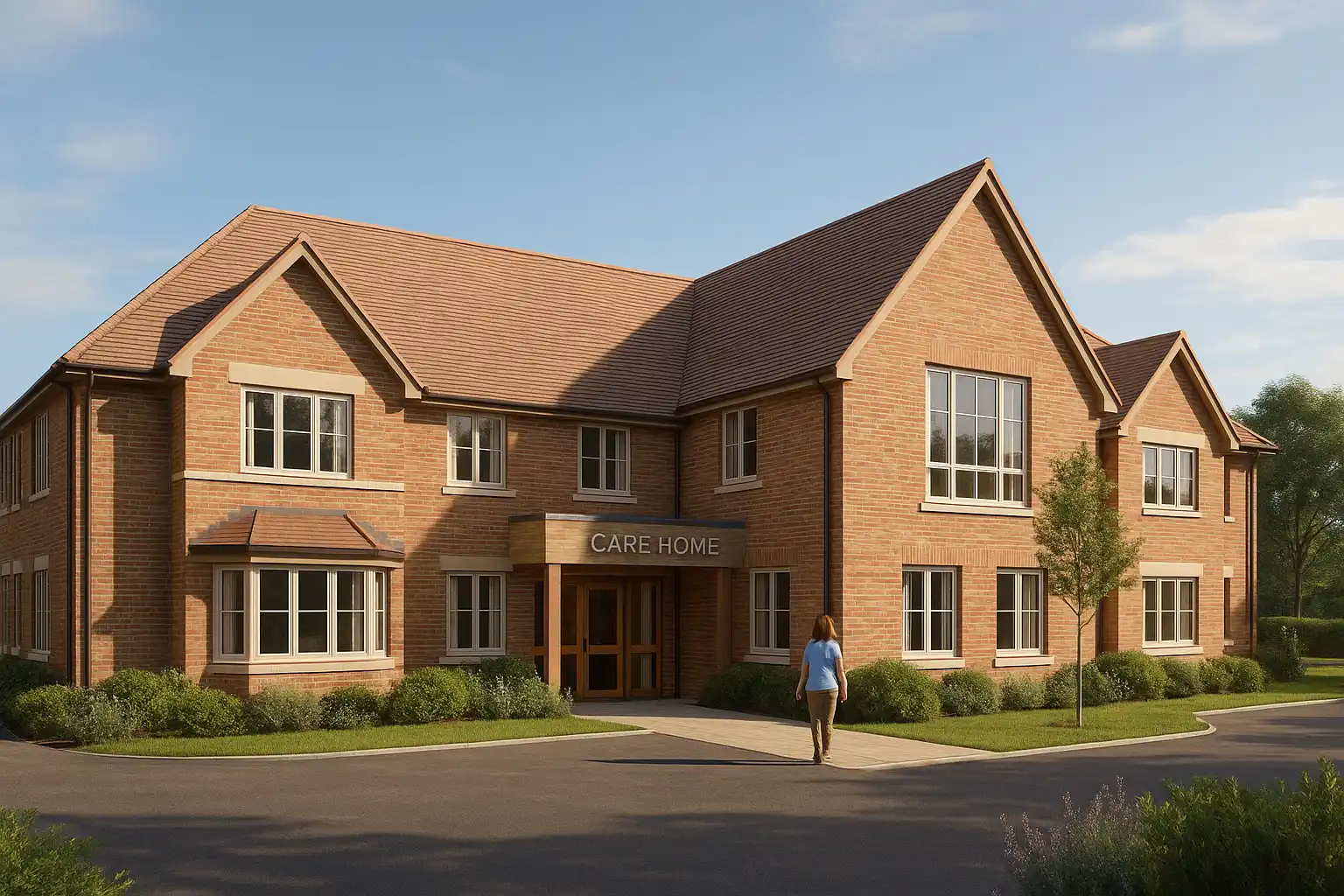
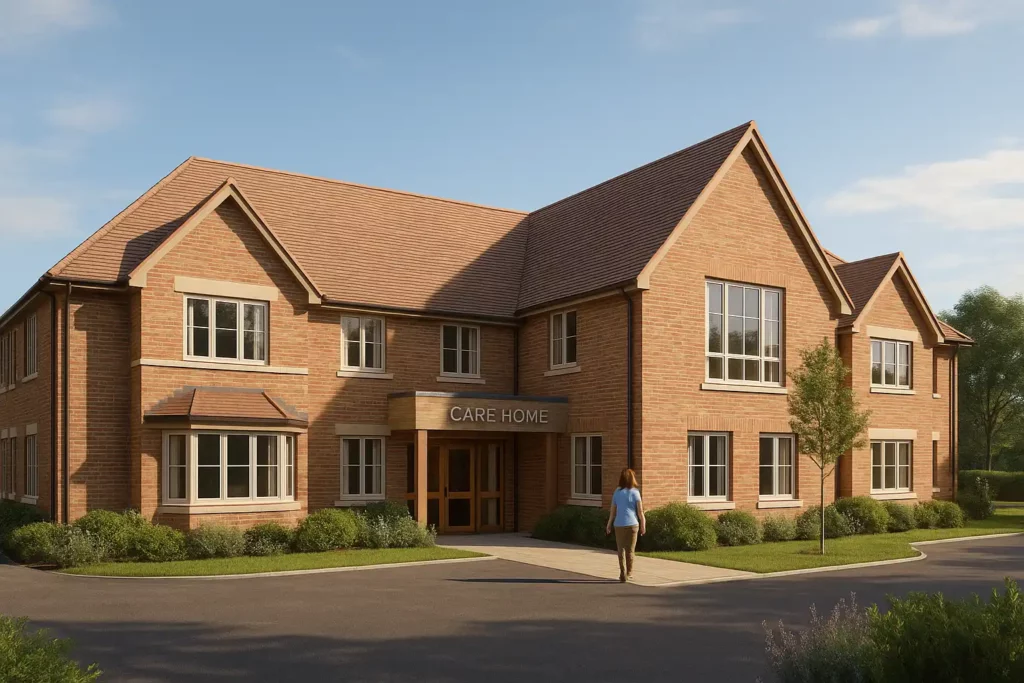
Our team delivered comprehensive acoustic consultancy for a new-build care home located in a peaceful but growing area of Dorset. As an experienced acoustic consultant in Dorset, we addressed unique challenges posed by the proximity of busy railway line, ensuring the comfort and wellbeing of future residents. If you’re in need of an acoustic consultant in Dorset, our expertise ensures seamless integration with local planning policies.
Client: Healthcare Developer
Job: Noise Impact Assessment & Plant Noise Assessment for a Planning Application
Location: Dorset
Completed: 2024
Main Concern: Railway Noise Ingress & Plant Noise Egress
Outcome: Approved
Acoustic Challenges
The care home site was situated close to a main railway line and exposed to regular noise from passing trains. This posed a risk to both indoor amenity and external garden spaces. In addition, the development included several mechanical plant items—specifically a kitchen extract fan. Additionally, a central air handling unit, and four Mitsubishi VRF PURY external condenser units. These plant sources required a detailed BS 4142:2014 assessment. This helped to demonstrate that noise emissions would not adversely impact either residents or neighbouring properties.
Our Solution
1. Baseline Noise Survey:
We carried out a full environmental noise survey. Monitoring both rail noise and background sound levels at the site boundary. This included day and night measurements.
2. BS 8233 Compliance – Building Fabric & Layout:
Using the survey data, we modelled internal noise environments and specified enhanced glazing and acoustically rated ventilators for bedrooms and lounges facing the railway line. The internal layout was optimised so that quieter spaces (such as bedrooms) were placed away from the noise source.
3. Plant Noise – BS 4142 Assessment:
A detailed BS 4142:2014 assessment was undertaken for the kitchen extract. As well as an air handling unit, and four Mitsubishi VRF PURY units. We specified appropriate acoustic enclosures, anti-vibration mounts, and low-noise options for the equipment. This helped to ensure rating levels were at least 5 dB below the background sound level at the nearest noise-sensitive receptors.
4. Ventilation Strategy:
Mechanical ventilation systems were specified with acoustic attenuation to maintain excellent indoor air quality, enabling windows to remain closed during high-noise events.
5. External Amenity:
Outdoor garden and seating areas were shielded with acoustic fencing and landscaping. Specifically, this provided residents with tranquil spaces for relaxation.
Results
- The care home now benefits from a quiet, healthy environment despite proximity to significant noise sources.
- All bedrooms and lounges achieved the indoor noise standards set out in BS 8233:2014, ensuring restful and comfortable living spaces.
- Plant noise levels were controlled to below the threshold of BS 4142:2014. Accordingly, this resulted in no adverse impacts on residents or neighbours.
- Planning permission was granted, with the acoustic strategy praised for its thoroughness and focus on resident wellbeing.