
If you’re trying to get planning consent, designing or building in the UK, noise objections can stall a great scheme. Planners want confidence that residents, neighbours and site users won’t be harmed by sound from roads, rail, plant or construction. The outcome you want is clear: a clean planning consent that’s deliverable without nasty surprises. Here’s how to get there fast—without over-engineering or overspending on mitigation using Environmental Noise Solutions.
To secure consent, agree methods with the EHO early, measure a robust baseline, assess against the right UK standards, and present pragmatic mitigation that fits the design. Environmental Noise Solutions typically combine layout, façade strategy, plant selection and construction controls—documented in a clear Noise Impact Assessment that addresses likely conditions and ultimately, gain planning consent.
Who this Guide is For
Planners, architects, developers, engineers and independent builders who want a practical, UK-specific route to planning approval where noise is an issue.
In this guide you’ll also see related terms you may search for: noise impact assessment, acoustic report, planning noise, sound insulation, plant noise assessment, construction noise control, façade sound reduction, vibration assessment, LAeq/LAmax/LA90, CEMP (Construction Environmental Management Plan). We use plain language and reference only relevant UK guidance.
What Planners Actually Need to See
Local Planning Authority (LPA) officers and Environmental Health Officers (EHOs) look for three things:
- Evidence: site measurements or a robust desk model;
- Standards: assessment against the correct UK documents (e.g., BS 8233:2014 for internal criteria, ProPG: Planning & Noise 2017 for new residential near transportation, BS 4142:2014+A1:2019 for industrial/plant sound, BS 5228 for construction control);
- Mitigation: proportionate measures integrated into the design, with drawings and specs they can condition.
If your submission delivers those clearly, review goes faster and conditions are easier to discharge.
Start Early: Screen the Risk and Set the Scope
Noise is cheaper to solve before layouts harden. Use Stage 1 risk screening from ProPG to understand whether a scheme near transport corridors is Low, Medium or High risk. Then, shape the assessment scope: where to measure, which façades matter most, which receptors are sensitive, and whether plant or servicing adds risk.
Agree the scope with the EHO at pre-app. A quick call often saves weeks later because expectations to achieve planning consent are aligned.
How Environmental Noise Solutions Unlock Planning Consent
The most effective approach to gain planning consent is both evidence-led and design-led. You combine accurate data with practical measures that fit the architecture and budget. Done right, it shortens determination times and avoids late-stage redesigns.
Baseline Noise: Do it Once, Do it Right
Good data is the foundation. We typically:
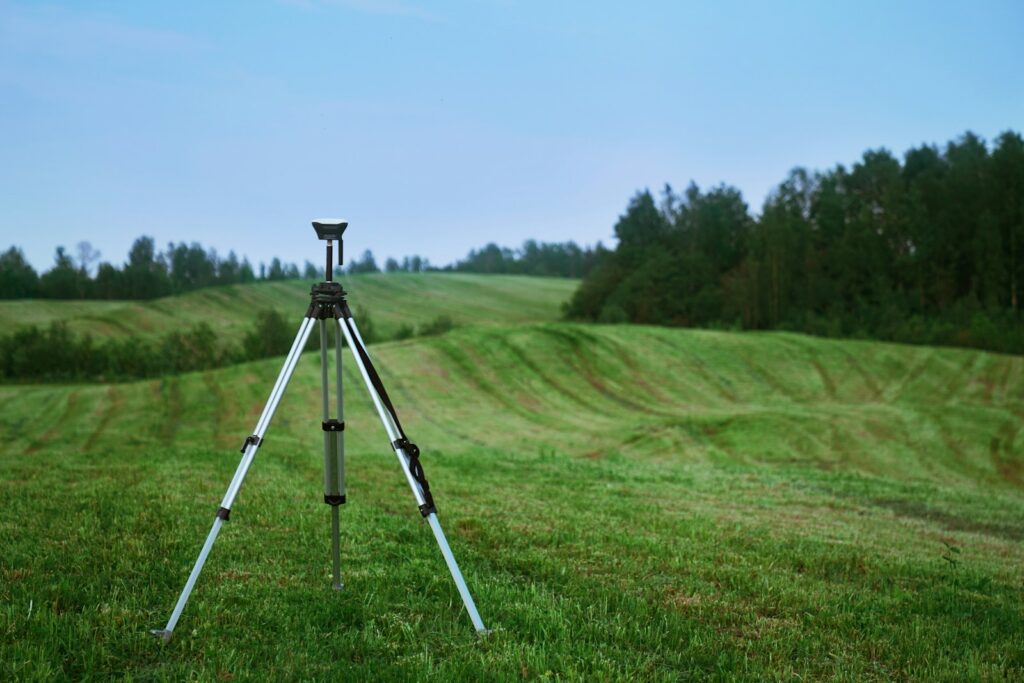
- Use Class 1 sound level meters (IEC 61672) with field calibration before and after.
- Measure representative days (and nights if bedrooms are proposed), avoiding rain or high winds.
- Position mics free-field when assessing façades and identify façade-reflected positions where relevant.
- Capture LAeq,T for energy-average exposure and LAmax where night-time sleep disturbance could occur.
- Log LA90 for background sound—essential for BS 4142 plant assessments.
Documenting the setup and including a photo-log helps the EHO trust your numbers.
Translate Sound Exposure Into Design Criteria
For dwellings, BS 8233:2014 gives good-practice indoor ambient noise levels, such as 35 dB LAeq,16h for living rooms and 30 dB LAeq,8h for bedrooms. ProPG builds on this with advice about night-time maxima and ventilation strategies. For non-residential uses, the same standard includes typical ranges for offices, schools and healthcare rooms so designs meet their functional needs.
Because criteria differ by room use and time of day, link each receptor to its target. Then, work back to a façade and ventilation design that achieves the numbers in practice, not just on paper.
Plant and Commercial Sound—Use BS 4142 Correctly
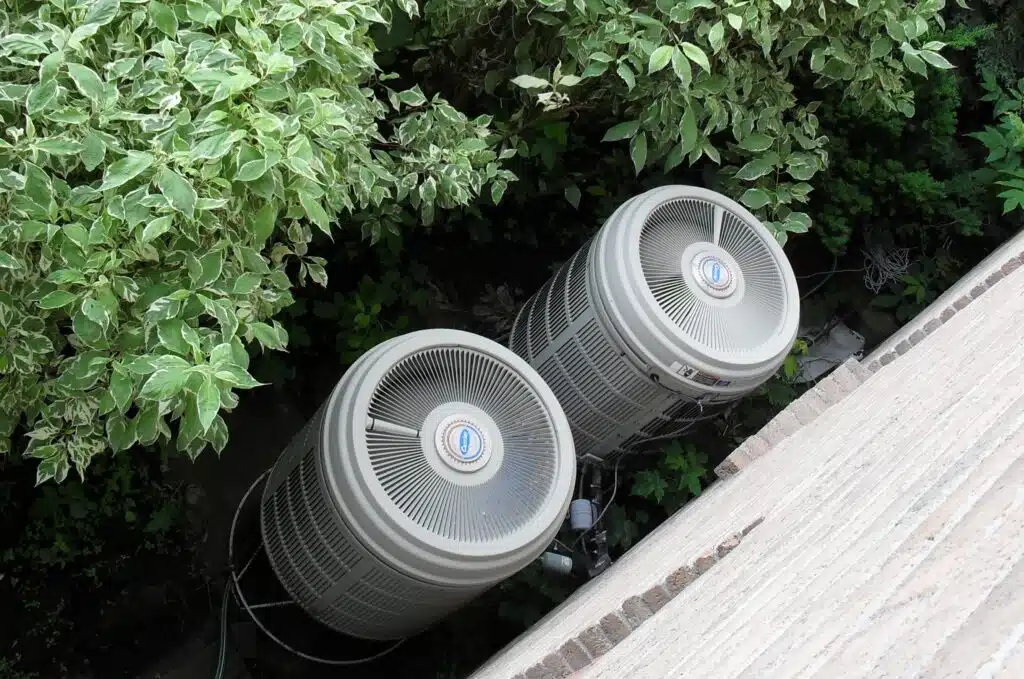
When your scheme adds fixed mechanical services (ASHPs, MVHRs, condensers, fans), you’ll almost always be assessed under BS 4142:2014+A1:2019. The method compares the plant’s rating level (L_Ar,Tr)—including penalties for tonality, impulsivity and intermittency—against the existing background sound level (LA90,T) at the nearest sensitive receptor.
As a rule of thumb, if the rating level is approximately equal to background, risk of adverse impact is low; ~+5 dBindicates an adverse impact is likely; ~+10 dB suggests a significant adverse impact is likely. Context matters, so document acoustic features and receptor sensitivity, then choose mitigation to bring the rating level down.
Construction Phase Control—Plan It, Don’t Just Promise It
Planners will often condition a CEMP. Under BS 5228-1 & -2, you can predict typical construction noise and vibration, set informed working hours, and commit to Best Practicable Means: quieter plant, acoustic enclosures, screening, sequencing and liaison with neighbours. Include a simple complaints protocol and a named contact—EHOs value it.
The Noise Mitigation Toolkit: Build Performance Into the Layout
The best Environmental Noise Solutions start with layout:
- Distance and orientation: place habitable rooms away from dominant sources where possible.
- Screening: use buildings, cores or landscaped bunds to shadow private amenity spaces.
- Quiet façades/quiet rooms: ensure every dwelling has a calmer side for bedrooms.
Then layer technical measures:
- Façade & glazing: specify composite Rw/DnT,w + Ctr performance by room. Use octave-band-led designs near low-frequency sources.
- Ventilation strategy: if windows are relied on for purge only, provide trickle-plus-MEV or MVHR so internal targets are met with windows closed during noise events.
- Balcony/amenity: solid soffits, side screens or acoustic barriers when external areas exceed target values.
- Plant selection: choose quieter models, reduce duty where feasible, fit anti-vibration mounts, ducts and attenuators; position intakes/exhausts away from sensitive façades.
Always show the mitigation on marked-up drawings and schedules. That’s what gets conditioned.

Example Pathways to Planning Consent
New flats beside a rail line
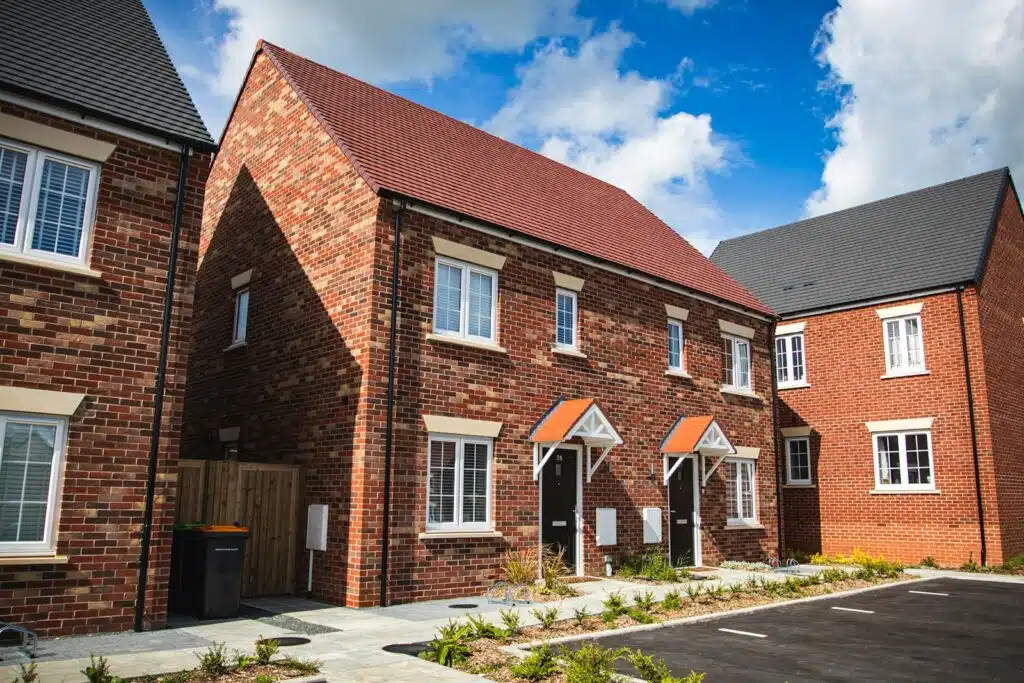
Screen with ProPG to set risk and survey positions. Design bedroom façades to achieve 30 dB LAeq,8h and control LAmax events using upgraded glazing and MVHR on railway-facing façades. Provide quiet-side bedrooms where the plot allows. Demonstrate compliance in a concise Noise Impact Assessment with floorplans, section details and a ventilation schedule.
Foodstore with rooftop condensers
Undertake a BS 4142 assessment at the nearest houses. Select low-specific-fan-power kit, add acoustic louvres and positional screening, then verify the rating level is at or below background. Include a commissioning condition and a maintenance plan in the report to keep performance stable over time.
Householder ASHP
For permitted development, use the MCS 020 calculation to screen noise at the neighbour’s position. If planning consent is needed, assess under BS 4142, choose a low-noise unit, and site it away from bedrooms or boundaries. Where space is tight, a small enclosure can solve it without visual bulk.
Reporting that Gets Planning Consent
Your acoustic report should be short, specific and checkable:
- Executive summary with results and a simple mitigation list.
- Method: equipment class, calibration, weather, positions, durations.
- Results: clear tables for LAeq, LAmax and LA90; include octave bands where needed.
- Standards and criteria: name them and explain why they apply.
- Assessment: daylight both worst case and typical case.
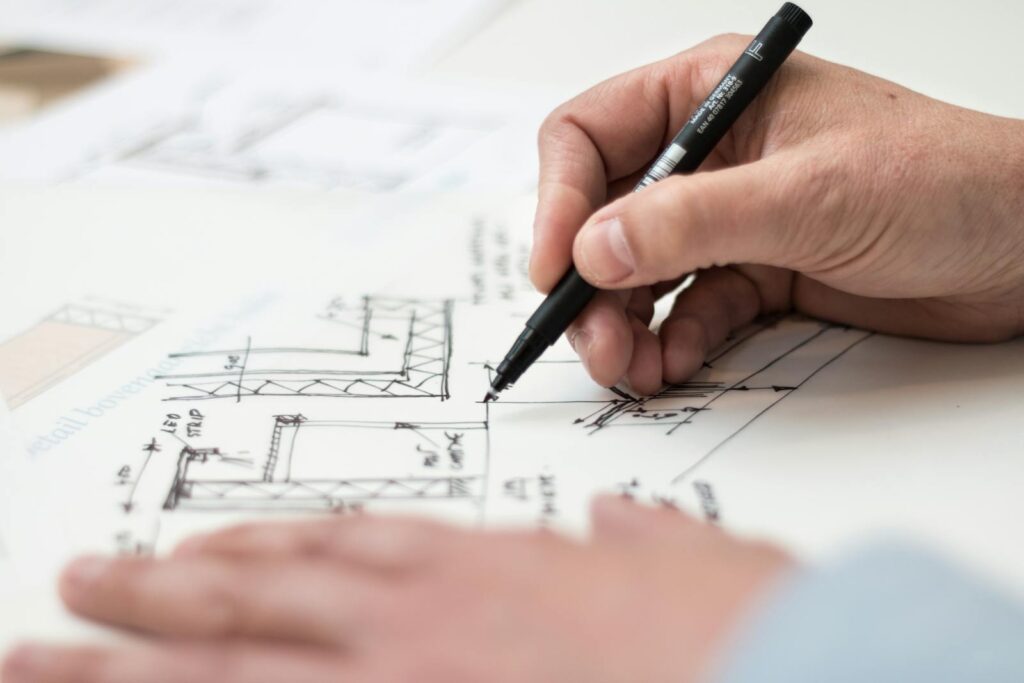
- Mitigation: drawings, schedules, and performance specs.
- Appendices: raw logs, calibration certs, photos, manufacturer data, and (if used) model inputs.
Presenting like this helps case officers copy-and-paste the right condition wording.
Typical Acoustic Planning Conditions (and How to Meet Them)
Planners often use a mix of these:
- Internal noise condition: dwellings must achieve BS 8233 internal levels.
- Plant condition: rating level from new plant not to exceed background at the nearest noise-sensitive receptor.
- CEMP: submit and implement a BS 5228-compliant plan.
- Verification: submit a post-completion test or commissioning report.
You can pre-empt these: include draft wording in your report and show how each will be discharged.
Cost and Programme—Keep It Realistic
Noise work doesn’t have to blow the budget. For small sites, a focused survey and targeted mitigation is usually enough. For complex mixed-use, expect more measurement locations, model iterations and coordination with M&E and façade engineers. Build in lead-in time for night-time monitoring where relevant, and book access to third-party roofs or land if needed.
If you’d like a precise scope and fee, see our acoustic consultancy services or contact us for a fast proposal.
Common Environmental Noise Solutions Pitfalls
- Under-scoping the survey: one 30-minute sample won’t cut it beside a dual carriageway. Capture representative periods.
- Relying on closed windows without alternative ventilation: planners push back unless a suitable system is provided.
- Forgetting external amenity spaces: BS 8233 and ProPG expect usable gardens and balconies with reasonable sound levels.
- Plant selection left to late stage: fix noise caps in the planning report so procurement can comply.
- Vague mitigation: “upgrade glazing as required” won’t be conditioned. Specify the performance and where it applies.
Environmental Noise Solutions Standards at a Glance (Quick Cheat-Sheet)
| Situation | Primary UK reference | What it’s for |
|---|---|---|
| New residential near roads/rail | ProPG: Planning & Noise (2017) | Risk screening, assessment approach, design outcomes |
| Internal noise in buildings | BS 8233:2014 | Good-practice internal ambient noise levels |
| Plant / industrial sound | BS 4142:2014+A1:2019 | Rating level vs background, context, penalties |
| Construction noise & vibration | BS 5228-1:2009+A1:2014 / -2 | Prediction and Best Practicable Means |
| Health-based context | WHO Environmental Noise Guidelines (2018) | Evidence on sleep/annoyance and exposure |
Use the right one for the right question and state it clearly in your submission.
Ventilation Strategies that Satisfy Both Acoustics Design and Building Regs
Acoustic criteria and indoor air quality should work together. Often the sweet spot is MEV or MVHR, especially where night-time rail or road events produce high LAmax values. Where natural ventilation is preferred, consider acoustic ventilators with tested Dn,e,w ratings and show that purge can be achieved safely. Coordinate with Part F and overheating analyses so the design is credible as a whole.
Making Noise Models Meaningful
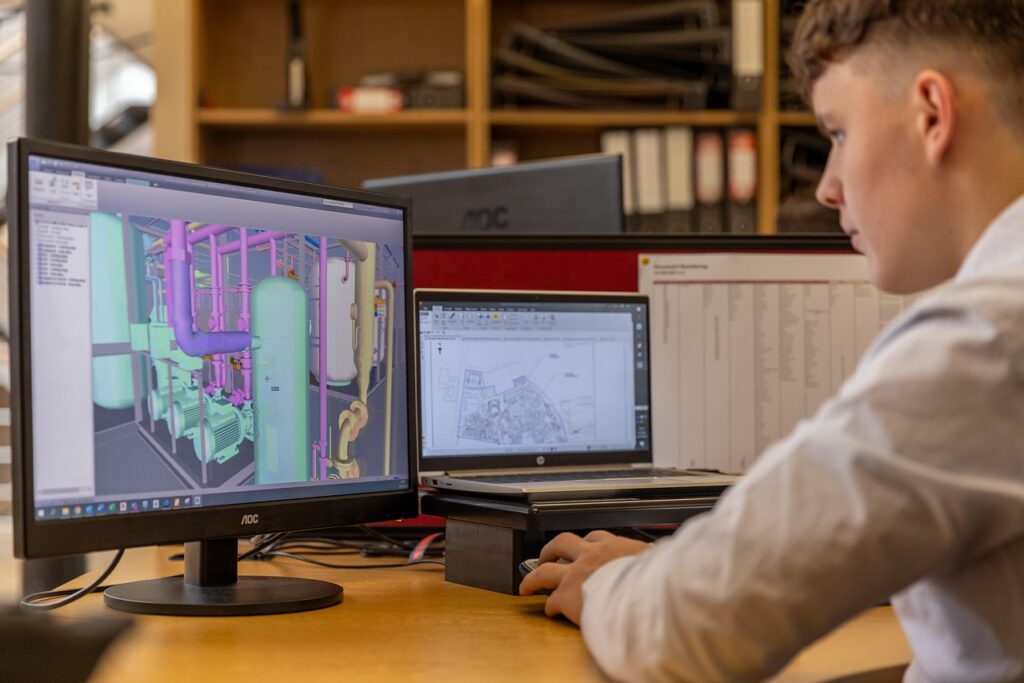
Noise mapping tools can help, but only when the inputs are declared. If you use software to predict façade levels or barrier performance, include the source terms, ground absorption, screening and reflection assumptions. Then, validate with measurement where feasible. Visuals—like a simple coloured contour plot—make EHOs’ jobs easier, provided you explain the scale.
Why Choose Polaris Acoustics
We’re a UK-based acoustic consultancy that blends planning know-how with buildable design. Our reports are readable, our drawings are condition-ready, and our mitigation is practical on site. If you need a swift, reliable route to consent, our team can help with surveys, BS 4142 plant assessments, ProPG submissions and construction support. Explore our services or speak to us today.
FAQs
How much does an acoustic report cost?
Costs scale with complexity. A small residential infill with a day/night survey is usually in the low four figures. Mixed-use or sites needing night monitoring, modelling and plant assessments will be higher. We’ll scope a fixed fee after a short call and a look at your drawings—request a quote.
How long will it take?
A typical programme is one to two weeks for monitoring (depending on access and weather) and about a week to report, plus LPA review time. If night-time data is needed or access is restricted, allow longer. We’ll set a realistic timeline at the outset.
What if the EHO disagrees with our method?
Engage early. We propose methodology at pre-app, agree the monitoring positions, and confirm the assessment standards by email. That paper trail speeds up consent and minimises rework.
Can I rely on trickle vents to meet bedroom targets?
Often not on noisy façades. If external levels are high, you’ll likely need acoustic ventilators MVHR so internal targets are achieved without opening windows at night.
Do heat pumps always need planning permission because of noise?
Not always. Many fall under permitted development if the MCS 020 screening is met. Where planning is required, a concise BS 4142 assessment and careful siting usually satisfies the EHO.
Conclusion: Planning Consent from Clear Environmental Noise Solutions
Planning approval follows when you measure well, assess against the right UK standards, and present integrated mitigation that fits the design. Build a transparent story from baseline to criteria, then to drawings and specs that can be conditioned. That’s how thoughtful Environmental Noise Solutions turn noise risk into a straightforward planning consent.
External references (for further reading)
- GOV.UK – Planning Practice Guidance: Noise (PPG)
- Institute of Acoustics & ANC – ProPG: Planning & Noise (2017)
- BSI – BS 4142:2014+A1:2019; BS 8233:2014; BS 5228-1/-2
- WHO – Environmental Noise Guidelines for the European Region (2018)