

A noise impact assessment report explains how noise has been considered for a proposed development and gives the local planning authority enough information to understand the likely effects of noise impacting nearby noise sensitive receptors and/or the development itself. It should identify the relevant noise sources and receptors, present the evidence used, explain the assessment method and state any mitigation on which the conclusion depends.
The value of the report lies in the connection between those elements. The planning requirement defines the question. Survey results and source information provide the evidence. Calculations translate that evidence to the relevant receptor, while the assessment places the result within the correct technical and planning context.
The conclusion should then follow from that analysis. It should not introduce new assumptions or describe the scheme as acceptable where important mitigation remains undefined.
This guide is concerned specifically with the contents of the completed report. Information about commissioning a noise impact assessment for planning applications is available on the main Polaris Acoustics service page.
What a Noise Impact Assessment Report Should Demonstrate

A competent noise impact assessment report should allow another suitably qualified reader to understand what has been assessed, why the chosen method was appropriate and how the findings were reached.
That does not mean every document needs the same length or level of modelling. A single air-conditioning condenser serving a small commercial unit presents a different technical question from a mixed-use development beside a railway and existing industrial premises.
The scope should be proportionate, but the evidence still needs to be traceable. Where information has been measured, the report should explain how and when it was measured. Where a result has been calculated, the method and principal inputs should be shown. Where design information is unavailable, assumptions should be identified instead of being presented as confirmed facts.
The Scope Must Match the Planning Question
As part of the noise impact assessment contents, the opening section should state who commissioned the noise impact assessment report, describe the proposed development and identify the relevant planning condition, validation requirement or Environmental Health comment.
This establishes what the work is intended to answer.
A report considering road traffic noise affecting proposed flats is addressing a different issue from one assessing mechanical plant at an existing dwelling. The first may need to consider internal noise levels, external amenity, façade sound insulation and ventilation. The second may require representative background sound levels, plant source data and an assessment at the most affected residential receptor.
The scope should also identify important exclusions. A noise impact assessment report may assess external plant noise without considering airborne or structure-borne sound transmission between adjoining commercial and residential premises. Where such a limitation could affect the planning decision, it should be clear from the outset rather than being concealed within a qualification at the end.
See our post on the 7 essential things you need to know before planning submission when considering noise.
The Site, Sources and Receptors Need to Be Clear
A planning officer or Environmental Health Officer should be able to understand the physical relationship between the proposed development, the sources of sound and the locations that may be affected.
The noise impact assessment report will normally include a location plan, proposed layout, monitoring positions and identified noise-sensitive receptors. Photographs can help explain the microphone positions, existing boundary treatments, intervening buildings and local sound sources.
Horizontal distance is only part of the relationship. Differences in elevation, building orientation, window positions and source directivity may alter which receptor represents the reasonable worst case.
For example, a ground-floor garden could benefit from screening provided by a boundary wall, while an upper-floor bedroom has an uninterrupted line of sight to rooftop equipment. The closest property would not necessarily contain the most exposed façade.
A reference to “nearby residential properties” is therefore too vague. The noise impact assessment report should identify the particular façade, window, garden or proposed room being assessed and explain why the selected position is appropriate.
Survey Evidence Must Represent the Relevant Conditions
A baseline noise survey is normally needed where the assessment depends on existing ambient or background sound levels. The report should describe when the survey took place, the measurement periods, the equipment used, calibration checks, microphone positions, weather conditions and observations made on site.
Survey duration alone does not demonstrate that the results are suitable.
A technically valid 24-hour measurement may be unrepresentative if the commercial operation of interest only takes place on Friday and Saturday nights. Conversely, a shorter attended survey may provide suitable evidence where the source is stable, readily identifiable and measured under a known operating condition.
A noise impact assessment report should explain why the chosen data represent the periods and activities under consideration. This may involve separating daytime and night-time results, removing rain-affected periods, identifying abnormal events or comparing unattended data with observations made during the installation and collection visits.
The acoustic quantities must also be linked to their reference periods. An , an and an LAFmax describe different aspects of the sound environment. A large export of meter data does not explain which values are representative or how they inform the assessment.
Measured, Calculated and Assumed Information
Measured, calculated and assumed information should be readily distinguishable within the report.
Measured information might include ambient sound levels, background sound levels, individual maximum events or sound from an existing item of equipment. The measurement position, operating condition and relevant time period should be stated.
Calculated information might include sound propagation from plant to a dwelling, the combined level from several sources or the façade sound insulation required to achieve suitable internal conditions. The calculation method and significant inputs should be visible so that the result can be checked.
Assumed information is sometimes unavoidable, particularly during the early design stages. Plant may not have been selected, room dimensions may change or the ventilation strategy may remain under development. Any assumptions should be clearly identified and should be conservative where appropriate.
The conclusion should then state whether those assumptions need confirmation before installation, construction or occupation.
This distinction prevents a precise-looking result from concealing uncertain inputs. It also avoids implying that a product has been specified when the assessment has only established a minimum acoustic performance requirement.
Acoustic Source Data and Calculations Must Be Traceable
Plant and equipment data should be linked to a manufacturer’s schedule, test report or other identifiable source. The report should distinguish between sound power level and sound pressure level, identify any stated measurement distance and explain the operating mode represented by the data.
This is a significant technical distinction. Sound power describes the total acoustic output of a source. Sound pressure depends on the measurement position and the conditions surrounding the source and receiver. Treating one as the other can materially alter the predicted result.
Where several units may operate simultaneously, their contributions need to be combined logarithmically. The calculation may also need to account for distance, screening, reflections, directivity, ground effects and atmospheric absorption.
Complex sites may justify a three-dimensional noise model. Smaller schemes may only require a transparent calculation schedule. In either case, the reader should be able to follow the principal inputs and attenuation terms.
Where ISO 9613-2:2024 is applied, the noise impact assessment report should state the source emission data and propagation assumptions rather than relying solely on a coloured contour plot. ISO describes the document as an engineering method for predicting environmental sound levels at a distance under meteorological conditions favourable to propagation.
The Assessment Method Must Fit the Noise Source
The applicable methodology depends on the acoustic question. The report should explain why a standard or guidance document is relevant instead of presenting a generic list of references.
For residential development exposed predominantly to transport noise, BS 8233:2014 may inform the assessment of internal and external acoustic conditions. BSI continues to list the 2014 edition as current.
ProPG: Planning & Noise provides a recommended approach for new residential development in England exposed predominantly to transport noise. Its emphasis extends beyond numerical façade calculations to the wider principle of good acoustic design.
Industrial and commercial sound affecting dwellings is commonly assessed using BS 4142:2014+A1:2019. The standard considers specific sound, acoustic character, background sound, uncertainty and the context in which the sound occurs.
Construction and demolition noise may be considered using BS 5228-1:2009+A1:2014. Where construction vibration is relevant, BS 5228-2:2009+A1:2014 may also apply.
Planning policy must be treated separately. The National Planning Policy Framework and the Planning Practice Guidance on noise apply in England. Scotland, Wales and Northern Ireland have their own planning policy frameworks, so English policy wording should not be presented as applying throughout the UK.
Mitigation Must Be Capable of Being Delivered
The mitigation section should convert the findings into requirements that can be incorporated into the design or operation of the development.
For a residential scheme, this might involve minimum glazing performance, façade construction and an appropriate ventilation strategy. The assessment needs to consider the complete façade, including ventilators and other acoustically weak elements.
A calculation based on closed windows is incomplete where acceptable conditions depend on an unspecified ventilation arrangement. Glazing, ventilation and overheating should be considered as connected design matters rather than separate products selected at different stages.
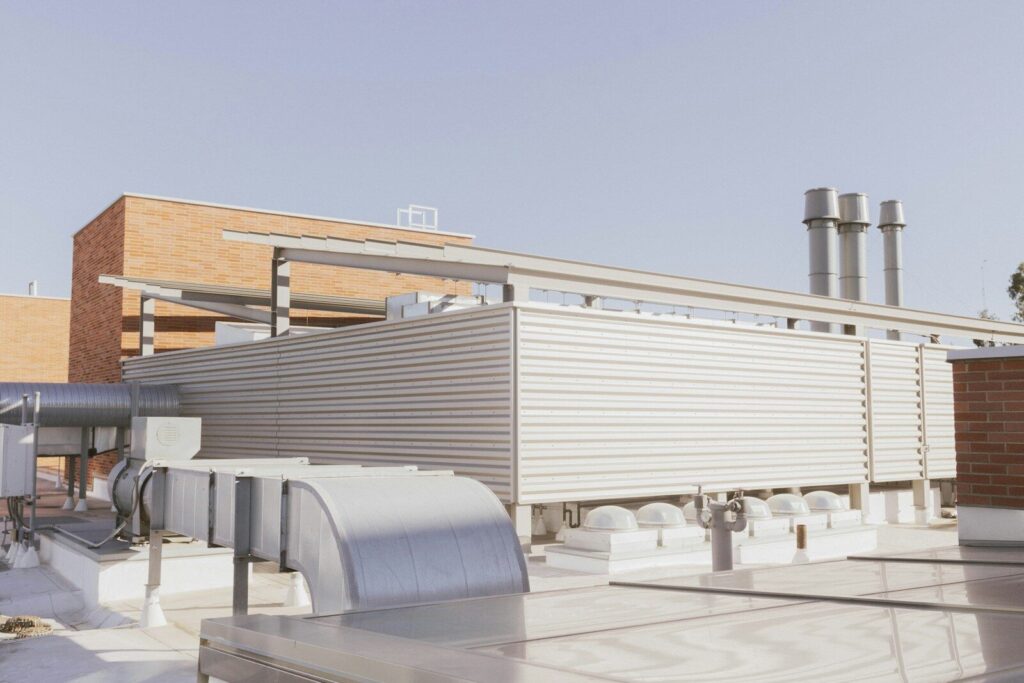
For mechanical plant, mitigation might involve a maximum permissible sound power level, attenuator performance, an enclosure, barrier dimensions, plant relocation or operating restrictions. The wording should indicate whether the report is referring to a confirmed product, setting a minimum performance requirement or describing an indicative option that still needs detailed design.
Descriptions such as “acoustic glazing”, “suitable attenuation” or “a solid fence” rarely provide enough information. A useful recommendation states the performance required and identifies the conditions under which that performance must be achieved.
The Conclusion Should State What the Finding Depends On
The conclusion of a noise impact assessment report should answer the planning question directly. It should state whether the proposal is acceptable in acoustic terms, identify any required mitigation and make clear whether information remains outstanding.
The wording should not extend beyond the evidence.
Where acceptability depends on a future plant sound power limit, the conclusion should state that the selected equipment must satisfy that limit. Where a façade calculation assumes a particular ventilation arrangement, that arrangement must be reflected in the proposed design.
Any further work should also be identified. This could include review of a final plant schedule, confirmation of glazing and ventilator data, detailed acoustic design or post-installation commissioning measurements.
Clear actions reduce the risk of an acoustic recommendation being lost between planning, detailed design, procurement and construction.
What Does a Noise Impact Assessment Include for Different Development Types?
The general evidential structure remains similar, although the technical emphasis changes according to the development.
Residential development
A residential noise impact assessment report may consider road, rail, aircraft, commercial or industrial noise affecting future occupants. Depending on the site, the assessment may address internal ambient noise, individual night-time events, external amenity, façade performance, ventilation and overheating.
Further information is available on Polaris Acoustics’ BS 8233 residential noise assessment service.
Mechanical plant and commercial sound
For fixed plant or commercial operations, the emphasis is usually placed on representative background sound levels, source data, operating periods, acoustic character and the predicted level at nearby dwellings.
A cumulative calculation may be needed where several items of equipment or activities can operate together. The assessment should not consider a single unit in isolation where the proposed development contains several comparable sources.
See the Polaris Acoustics page covering BS 4142 plant noise assessments.
Mixed-use, Class MA and leisure development
A mixed-use or leisure scheme may contain several distinct transmission routes. Amplified music, voices, impacts, deliveries, fixed plant and structure-borne sound should not automatically be treated as one generic commercial source.
The evidence needed for each source may differ. A report dealing with external plant emissions does not, by itself, establish whether low-frequency music or impact noise will be sufficiently controlled through a separating structure.
Construction and demolition
A construction assessment is generally based on the proposed programme, plant schedule, working methods, activity duration and receptor distances.
The resulting noise impact assessment report may support a planning application, a construction environmental management plan or the discharge of a planning condition. Further information is available on construction noise assessment and monitoring.
What Weak Noise Impact Assessment Reports Commonly Get Wrong

A weak noise impact assessment report may contain a substantial volume of data while failing to answer the planning question.
Typical problems include an unrepresentative monitoring position, incomplete weather records, unsupported source data, confusion between sound pressure and sound power, unclear equipment quantities or unexplained acoustic corrections.
Façade assessments sometimes calculate glazing performance while overlooking ventilators or other elements within the same external wall. Plant assessments may rely on nominal manufacturer data without confirming whether the stated levels represent the proposed operating condition.
Mitigation can also be too vague to incorporate into the design. A report might recommend “standard double glazing”, an unspecified acoustic enclosure or a fence of unknown height and construction.
Another warning sign is a conclusion that is stronger than the analysis. An impact should not be described as acceptable where the result depends on mitigation that has neither been defined nor secured.
These deficiencies do not necessarily require a longer report. They require clearer reasoning, traceable inputs and recommendations that correspond with the scheme actually being assessed.
What Information Should Be Provided at the Start?
For the noise impact assessment report — and if required, noise survey — the consultant will normally need the site address, proposed drawings, planning reference, council comments and a clear description of the proposed development or operation.
Where relevant, the information should also include plant schedules, manufacturer acoustic data, proposed operating hours, ventilation information and previous acoustic reports.
Missing information does not always prevent the assessment from starting. The noise impact assessment report must, however, explain how those gaps have been treated and identify what needs to be confirmed later.
Early confirmation of the proposed products and operating arrangements usually produces a more robust submission than relying on generic assumptions that need to be revised after the planning application has been made.
Commissioning a Noise Impact Assessment Report

Polaris Acoustics prepares planning-focused assessments for residential, commercial, industrial, leisure and mixed-use developments across the UK.
Each noise impact assessment report is developed around the site conditions, planning requirement and relevant acoustic question rather than being produced from a generic template.
To confirm the appropriate scope, send the site address, proposed drawings and any Environmental Health or planning comments through the Polaris Acoustics contact page.
Frequently Asked Questions
Does every noise impact assessment report require a noise survey?
No. A survey is normally required where the assessment depends on existing ambient or background sound levels. Reliable existing information or a focused desktop calculation may occasionally be sufficient, provided the report explains why the evidence is suitable and representative.
Can the report be prepared before the plant is selected?
A preliminary assessment can establish a maximum permissible sound level or minimum mitigation requirement. The final equipment, location and operating condition may still need to be checked before the design is fixed.
Who should prepare a noise impact assessment report?
The document should be prepared by someone with suitable acoustic competence and experience of the relevant assessment method. The level of expertise required will depend on the complexity of the development and the potential planning risk, although it is typically expected that the person holds at minimum, full corporate membership (MIOA) with the Institute of Acoustics.
How long does a noise impact assessment report remain valid?
There is no fixed expiry period. Its continuing validity depends on whether the proposed design, surrounding sources, baseline sound environment, planning context and relevant technical guidance remain materially unchanged.
Can a generic noise impact assessment report template be submitted?
A template can provide headings and a consistent structure. It cannot select the correct receptors, survey method, source data, calculation assumptions or mitigation for an individual site. Those elements need to be project-specific.
How much is a noise impact assessment report?
Costs vary significantly. It is typical for consultants to charge approximately £600+ for a desktop study where existing survey data is available or otherwise where a noise survey is not required. Including a survey, prices can typically vary from approximately £1,200 to more than £2,000. With multiple measurement positions and/or for more complex sites, costs can significantly exceed £2,000.