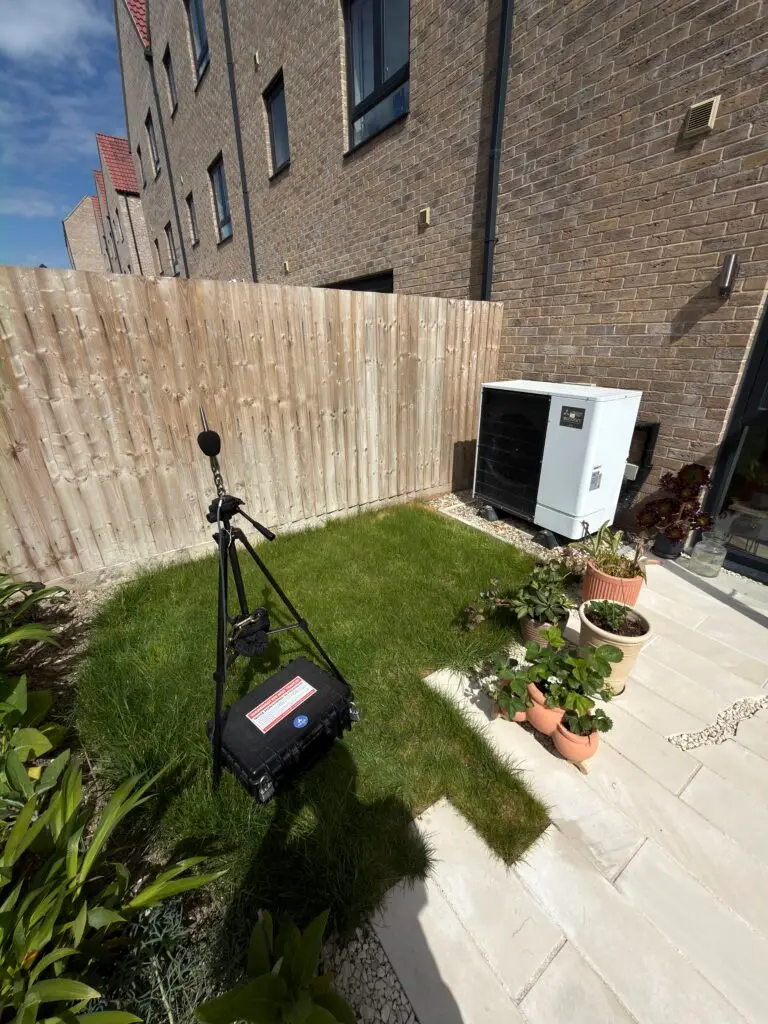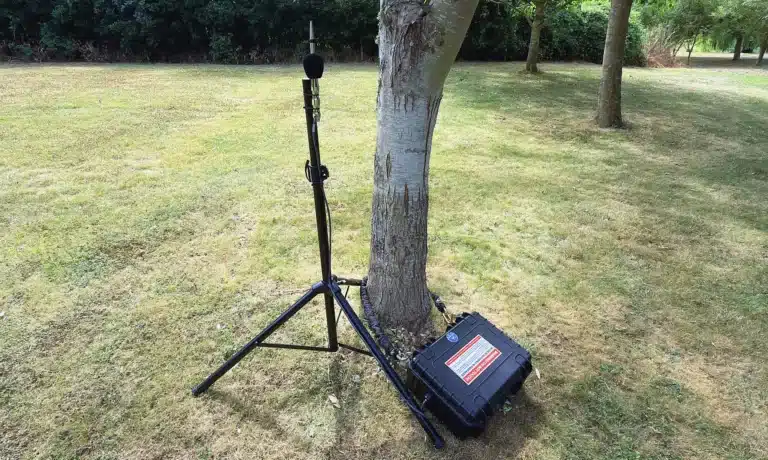


Acoustic consultants for London planning applications
Planning-ready noise surveys in London, noise impact assessments and acoustic reports for developments across central London, the City and all of Greater London's 32 boroughs.
From plant noise conditions in Westminster to new homes beside the railway in Southwark, we measure, assess and report against BS 8233, ProPG, BS 4142 and London Plan policy, giving planning officers and Environmental Health the evidence they need to approve your scheme.
MIOA acoustic consultant · Class 1 instrumentation · Fixed-fee quotes · Site visits typically within 3–5 working days
London planning noise requirements
London boroughs ask for acoustic evidence whenever noise could affect a new development, or a new development could affect its neighbours. These are the situations we are most often asked to assess.
Flats and houses near main roads, rail, Underground and Overground lines or under flight paths, where glazing and ventilation must be specified.
Air conditioning, heat pumps, condensers and kitchen extract that must meet the borough's plant noise criteria.
Office-to-residential, Class MA prior approval and new flats above shops, bars or restaurants.
Pubs, bars, music venues and late-night uses, and new homes built next to them under the Agent of Change principle.
Already received a planning condition or an Environmental Health request for a noise assessment?
Send us the detailsLocal planning knowledge
London planning authorities apply national guidance, the London Plan and their own local policies, and the detail varies from borough to borough.
Knowing what the case officer and Environmental Health will expect before the survey is booked is what keeps an application moving, and avoids the cost of re-surveying.

London planning guide
What London Councils Expect From a Noise Survey
Read the guide →
Plant noise in central boroughs
Westminster, Camden and other central boroughs commonly require new plant to operate 5–10 dB below the existing background noise level, a tighter target than a typical BS 4142 ‘low impact’ outcome.
Assessment: BS 4142 plant noise assessment
London Plan Policy D14: Noise
Noise-sensitive development should be separated from major noise sources through layout, orientation, screening and materials, in preference to relying on sound insulation alone.
Assessment: BS 8233 and ProPG residential noise assessment
Overheating: Approved Document O
Where road, rail or aircraft noise means bedroom windows would need to stay closed at night, Approved Document O requires another way of preventing overheating, so noise, ventilation and cooling have to be designed together.
Assessment: acoustics, ventilation and overheating (AVO) review
Agent of Change: Policy D13
New homes near existing pubs, music venues and industry must build in the mitigation needed, so established uses are not put at risk by future complaints.
Assessment: entertainment and music noise assessment
Construction on dense urban sites
Boroughs frequently require Construction Management Plans and Section 61 consents, with noise and vibration predicted and monitored to BS 5228.
Assessment: BS 5228 construction noise and vibration
Noise conditions and discharge
Approvals frequently carry noise conditions requiring a mitigation scheme to be agreed before work starts, and sometimes testing to show compliance before the homes are occupied.
Assessment: condition discharge report and compliance testing
Acoustic services in London
Whether you need a noise assessment, an acoustic survey or ongoing noise monitoring in London, every report is written for the people who have to approve it: clear methodology, transparent data and practical mitigation your design team can act on.
Planning-ready noise impact assessments for residential, commercial and mixed-use schemes, including responses to planning conditions.
Noise impact assessments →
Day and night noise surveys to set glazing, ventilation and garden-area design for new homes near roads, rail and commercial uses.
Environmental noise surveys →
Assessments for air conditioning, heat pumps, extract and condensers, designed around each borough's plant noise limits.
Plant noise assessments →
Construction noise and vibration predictions, Section 61 support and on-site monitoring for London build programmes.
Construction noise monitoring →
How it works
A clear, fixed-fee process built around London planning deadlines. You always know what is being assessed, why, and when the report will be ready.
01
Share the site address, drawings and any planning condition or EHO comments. We confirm the right assessment and send a fixed-fee quote.
02
We measure the existing noise climate with Class 1 instrumentation, including night-time and unattended monitoring where the assessment calls for it.
03
Results are assessed against BS 8233, ProPG, BS 4142 or BS 5228 as relevant, with clear, practical mitigation set out for your design team.
04
We respond to questions from planning officers and Environmental Health, and help you discharge noise-related planning conditions.
London noise sources
Every London site has its own noise climate. We design each survey around the sources that matter at your address, measured at the right times and positions so the assessment stands up to scrutiny from planning officers and Environmental Health.
Red routes, the North and South Circular, A-roads and busy high streets, often with significant night-time bus and HGV movements.
Surface rail, Overground and Elizabeth line routes, plus ground-borne noise and vibration from tunnels running beneath a site.
Flight paths into Heathrow and London City Airport affect large parts of west and east London, including early-morning arrivals.
Pubs, bars, clubs and late-night takeaways, including patron noise, amplified music, deliveries and waste collections.
Rooftop air conditioning, kitchen extract and supermarket refrigeration plant in dense, mixed-use streets.
Demolition, piling and basement excavation on tightly constrained urban sites next to occupied buildings.
Policy and guidance
Every London report is framed around the policy the case officer will apply: national policy and guidance, the London Plan 2021 and the Mayor's London Environment Strategy, and the borough's own Local Plan, such as Camden Local Plan Policy A4 (Noise and Vibration) or the Westminster City Plan.
National policy
NPPF
PPG Noise
Noise Policy Statement for England
London and borough policy
London Plan D13: Agent of Change
London Plan D14: Noise
London Environment Strategy
Borough Local Plans
Standards and guidance
ProPG
BS 8233
BS 4142
BS 5228
Approved Document O
Areas we cover
We carry out noise surveys and acoustic assessments throughout central London, the City of London and Greater London's outer boroughs, for developers, architects, planning consultants and homeowners.
Central London
Dense, mixed-use streets where the key issues are tight plant noise limits, the night-time economy, Underground vibration and construction next to occupied buildings.
City of London · Westminster · Camden · Islington · Hackney · Tower Hamlets · Southwark · Lambeth · Kensington and Chelsea · Hammersmith and Fulham · Wandsworth · Lewisham
Outer London and Greater London
Greater London's outer boroughs bring different challenges: new housing beside the M25, A-roads and rail corridors, Heathrow flight paths across the west, and homes planned next to established industrial land.
Croydon · Barnet · Enfield · Bromley · Ealing · Brent · Harrow · Hillingdon · Hounslow · Kingston upon Thames · Richmond upon Thames · Sutton · Merton · Havering · Redbridge · Newham · Greenwich · Bexley
Frequently asked questions
Straight answers to the questions developers, architects and homeowners ask us most about London noise surveys and acoustic reports.
Usually, if noise could affect the people who will use the development, or the development could affect its neighbours. Common triggers are new homes near busy roads, railways or commercial premises, new plant or air conditioning, change of use to residential, and late-night venues. Most London boroughs list a noise assessment in their local validation requirements for these schemes. If you are unsure, send us the site address and we will tell you whether an assessment is likely to be needed.
It depends on the type of assessment, how long monitoring needs to run and what the borough requires. A short attended survey for a single air conditioning unit takes far less time than several days of unattended monitoring for a residential scheme beside a railway. We provide a fixed-fee quote once we have the site address, drawings and any planning comments. Our guide to noise assessment costs explains the main price factors.
Site visits can typically be arranged within 3–5 working days of instruction, with faster options for urgent planning deadlines. Reporting time depends on how long monitoring runs and the complexity of the scheme, so we confirm the full programme with your quote and you can plan your submission around it.
Central boroughs have dense residential populations living close to commercial plant, so they commonly set limits of 5–10 dB below the existing background noise level rather than relying on a standard BS 4142 outcome. The survey has to capture the quietest representative background level, often at night, so plant can be selected and attenuated to meet the limit first time.
BS 8233 gives guidance on acceptable noise levels inside and around homes and other buildings. Together with ProPG, it is used to design glazing, ventilation and outdoor amenity areas for new residential development. BS 4142 assesses the impact of industrial and commercial sound, such as plant and machinery, on nearby residents by comparing it with the existing background sound level.
Yes. We work across all 32 London boroughs and the City of London, from central boroughs such as Westminster, Camden and Tower Hamlets to outer boroughs such as Croydon, Bromley, Barnet, Enfield, Hillingdon and Havering. Outer-borough projects often involve new housing near the M25, A-roads and rail lines, Heathrow flight paths in the west, or homes planned beside established industrial land.
Often not, if the installation qualifies as permitted development, which includes meeting the MCS 020(a) noise standard at the nearest neighbour. If it does not qualify, for example because of the unit's position, the property's listed status or local restrictions, planning permission may be needed and the council may ask for a noise assessment to BS 4142. Our guide to reducing air source heat pump noise covers the practical options.
Class MA prior approval requires the council to consider the impact of noise from commercial premises on the intended occupiers of the new homes. In London, where conversions often sit above or beside shops, bars, restaurants and rooftop plant, a noise assessment is usually the clearest way to show that the new flats will provide acceptable living conditions.
A planning noise report sets out the site and proposal, the relevant policy and standards, the survey methodology and equipment, the measured results, the assessment against the applicable criteria and any mitigation needed, such as glazing, ventilation, barriers or plant attenuation. See what a noise impact assessment report includes for a full breakdown.
London noise surveys
Send us the site address, drawings and any comments from the council or Environmental Health. We will confirm exactly which assessment you need and send a fixed-fee quote. We aim to respond to every enquiry within 24–48 hours.
MIOA acoustic consultant · Class 1 instrumentation · Fixed fees · UK-wide