Services · Noise surveys
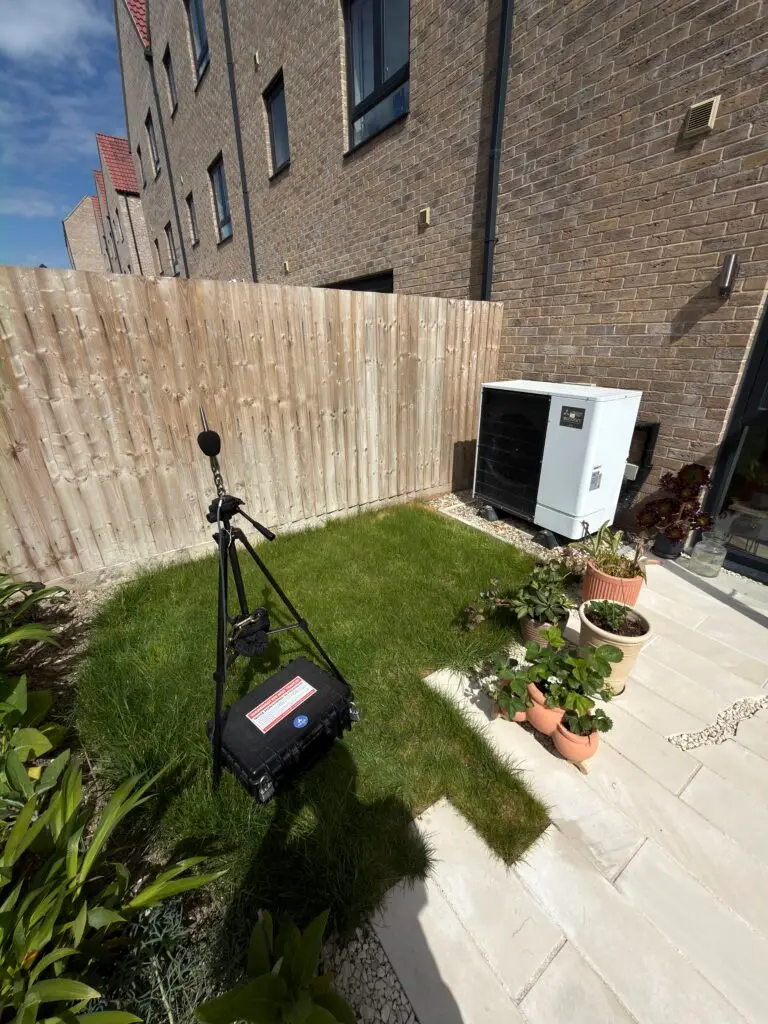
A noise survey measures the sound at your site, so the council can see how noise affects your development or how your development affects its neighbours.
Mathew Vaughan MSc MIOA scopes the survey, carries out the measurements, analyses the data and writes the report, and speaks directly with your project team.
MIOA acoustic consultant · Class 1 instrumentation · Fixed-fee quotes · Survey dates confirmed with your quote
At a glance
Measures
LAeq, LAFmax and LA90
Typical survey
24 hours to 7 days
You receive
Noise report for planning
Consultant
Mathew Vaughan MSc MIOA
24 hours
Usual minimum for a planning survey, so day and night are both captured
7 days
Typical upper range, for sites where noise sources vary
Class 1
Calibrated sound level instrumentation
LA90
Background sound level, reported with LAeq and LAFmax
Survey length follows the planning question, so a short attended survey may be enough on some sites. See our noise assessment cost guide for how this affects the fee.
When you need one
A council may ask for a noise survey where new homes would be exposed to traffic or other environmental noise, or where a proposed activity could affect neighbours. It may be needed with a planning application or to address a condition on an existing permission.
Houses and flats near roads, railways or commercial premises, where glazing and ventilation have to be designed around measured levels.
Air conditioning, heat pumps, extract and condensers, where the existing background sound level is the starting point for the assessment.
Conversions to flats, Class MA prior approval and new uses such as cafés, gyms or bars beside homes.
A noise condition on a permission you already hold, or a request from Environmental Health for measured evidence.
Already received a planning condition or an Environmental Health request for a noise assessment?
Get a fixed-fee quoteWhat happens
A survey starts with a brief: the proposed development, the sounds of interest and the locations where their effects matter. We review the plans and council requirements before deciding where and when to measure.
A survey measures the sound environment. An assessment interprets those measurements against the proposal and the relevant guidance. A report for planning will often contain both.

Report guide
Noise Survey Report Guide for UK Planning
Read the guide →
Survey brief
We review the drawings, the council’s requirements and any planning comments, then confirm the measurement positions and timing.
Output: agreed survey scope
Class 1 measurement
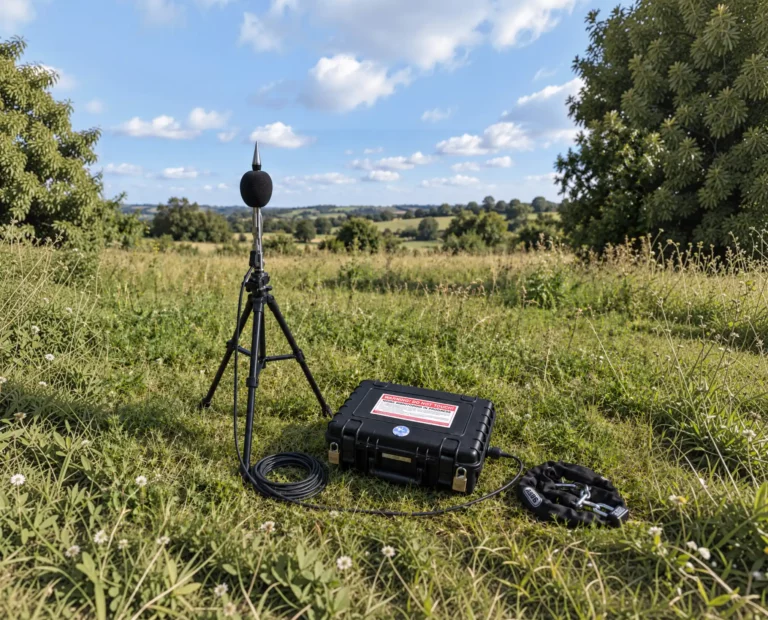
Calibrated Class 1 sound level equipment positioned to capture representative conditions, with calibration checks before and after measurement.
Output: calibrated measurements
Day and night monitoring
Usually unattended monitoring over at least 24 hours, so daytime, night-time and individual noise events are all captured.
Output: LAeq, LAFmax and LA90 data
Attended observations
Attended observations can identify sounds that an unattended logger records without explaining their source.
Output: site observations and photographs
Data checks
Weather information and site observations are reviewed, and the data is checked for unsuitable periods before it is used.
Output: representative noise levels
Report
The results are set out in a report that connects the measurements to the planning question.
Output: noise report for your application
Related services
A noise survey provides the evidence. These services use that evidence to answer the question your council has asked.
Noise impact assessments for residential, commercial and mixed-use schemes, including responses to planning conditions.
Noise impact assessments →
Day and night noise surveys that set glazing, ventilation and garden design for new homes near roads and railways.
Environmental noise surveys →
Assessments for air conditioning, condensers, extract and other fixed plant close to homes.
Plant noise assessments →
ProPG and BS 8233 assessments for new homes, conversions and Class MA prior approval, including overheating.
Residential noise consultants →
How it works
A clear, fixed-fee process built around your planning programme. You know what is being measured, why, and what it will cost before any work starts.
01
Share the site address, drawings and any planning condition or EHO comments. We confirm the right assessment and send a fixed-fee quote.
02
We measure the existing noise climate with Class 1 instrumentation, including night-time and unattended monitoring where the assessment calls for it.
03
Results are assessed against BS 8233, ProPG, BS 4142 or BS 5228 as relevant, with clear, practical mitigation set out for your design team.
04
We respond to questions from planning officers and Environmental Health, and help you discharge noise-related planning conditions.
What you receive
A planning noise report is written so planning officers, Environmental Health and your design team can act on it. It sets out the following.
The development, the relevant noise sources and the locations where their effects matter.
The planning policy, standards and council requirements that apply to your site.
Where and when measurements were taken, the equipment used and the conditions on site.
The levels recorded during the survey, with each figure shown against its measurement period.
The results assessed against the criteria that apply to your application.
Any measures needed, such as glazing, ventilation, barriers or plant attenuation.
Policy and guidance
Reports are framed around national planning policy, the relevant Local Plan and the requirements of your council and its Environmental Health team.
Planning policy
NPPF and PPG Noise
Planning Policy Wales and TAN 11
NPF4 and PAN 1/2011
Local requirements
Council validation requirements
Planning conditions
Agent of Change
Environmental Health guidance
Standards and guidance
BS 8233:2014
ProPG
BS 4142:2014+A1:2019
BS 5228
ISO 9613-2
Where we work
We carry out noise surveys for developers, architects, planning consultants and homeowners throughout the UK.
Across England
Noise surveys for planning, run from our Southampton base.
London · South East · South West · East of England · Midlands · North West · North East · Yorkshire
Wales, Scotland and Northern Ireland
Surveys and assessments framed around each nation’s own planning policy and Environmental Health expectations.
Cardiff · Newport · Swansea · Glasgow · Edinburgh · Dundee · Aberdeen · Belfast
Recent case studies
Granted · Eastleigh Borough Council · May 2026
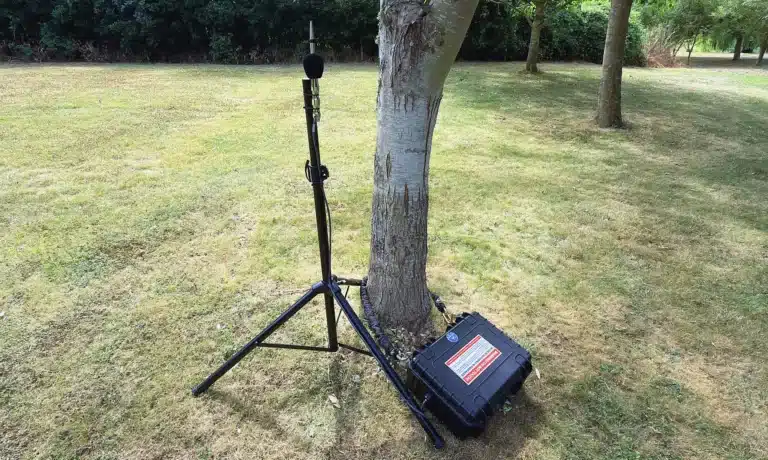
Four-day unattended survey. Read the case study →
Granted · Cumberland Council · Oct 2026
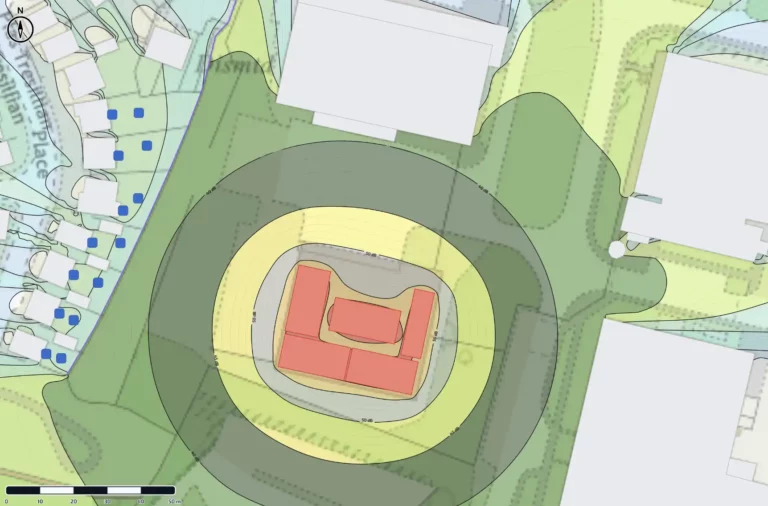
Environmental noise survey and noise model. Read the case study →
★★★★★
“Fast, efficient, and delivered on what was promised. Professional, friendly and accommodating.”
Paul Lewis · Google review
Frequently asked questions
Straight answers to the questions developers, architects and homeowners ask about noise surveys for planning.
A noise survey is a measurement of the existing sound at a site under recorded conditions, usually with unattended monitoring over at least 24 hours, so daytime, night-time and individual noise events are all captured. The results provide the evidence for any noise assessment.
You may need one where a development introduces noise near neighbouring properties or places new homes beside existing noise sources. Check the council’s validation requirements and any Environmental Health comments. If permission has already been granted, the wording of a noise condition will determine what evidence is needed.
Most planning surveys run for between 24 hours and seven days, depending on the noise sources and what the council expects. Some projects need weekday and weekend coverage, or observations during a particular activity, and a short attended survey may be enough for a small source. We explain the proposed duration and why it suits your site.
Simple noise assessments can start from around £750, and a planning noise survey and report for a small-to-medium project commonly costs £1,000–£2,500+. The fee depends on how long monitoring needs to run, the number of measurement positions and what the council requires. We always provide a fixed-fee quote. Our guide to noise assessment costs explains the main price factors.
A noise survey measures sound under recorded site conditions. A noise assessment interprets those measurements and considers the proposed development. Assessing new extraction equipment, for example, usually involves predicting its contribution at neighbouring homes as well as measuring the existing sound environment.
We use Class 1 sound level equipment, supported by calibration checks and documented survey conditions, to obtain measurements suitable for the assessment.
Potentially, provided its measurement locations, methods and conditions remain relevant. There is no single expiry period suitable for every survey. Changes to traffic, neighbouring activities or the proposed development may require additional measurements, so we review the original report before relying on it.
Survey dates are confirmed with your quote. The timing depends on when the relevant noise sources need to be measured.
A planning noise report sets out the site and proposal, the relevant policy and standards, the survey methodology and equipment, the measured results, the assessment against the applicable criteria and any mitigation needed, such as glazing, ventilation, barriers or plant attenuation. Our noise survey report guide explains how to read one. A report provides evidence for a decision and cannot by itself secure planning permission.
Noise surveys
Send us the site address, drawings and any comments from the council or Environmental Health. We’ll confirm exactly which survey you need and send a fixed-fee quote. Speak directly to Mathew Vaughan MSc MIOA, the consultant who does the work.
MIOA acoustic consultant · Class 1 instrumentation · Fixed fees · UK-wide