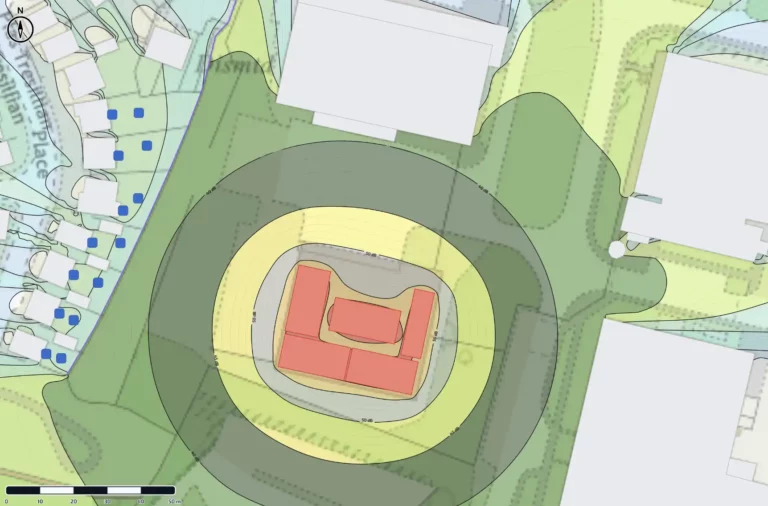

Two terms frequently arise in acoustics: sound power and sound pressure. While they may sound similar, they represent distinct aspects of sound propagation. This guide explains the differences between them, covering their definitions, measurements, and real-world applications.

Defining Sound Power and Sound Pressure:
- Sound Power: Sound power is the rate at which a sound source radiates acoustic energy in all directions, measured in watts (W).
- Sound Pressure: Sound pressure on the other hand, measures the variation in air pressure caused by sound waves. This indicates the level of sound at a specific point in space, expressed in pascals (Pa). It also depends on influences such as distance from the source and environmental conditions.
Sound power is like the heat emitted by a bonfire, representing the total output. Sound pressure is the warmth you feel at different distances, showing what reaches specific points.
Measuring Sound Power and Sound Pressure:
Sound Power Measurement
Sound power is not read directly from a meter. It is determined from sound pressure or sound intensity measurements under standards such as ISO 3741, ISO 3744, ISO 3745 or ISO 9614, often using anechoic chambers and other specialist facilities.
Sound Pressure Measurement
A sound level meter measures sound pressure, capturing the variation in air pressure caused by sound waves at a specific location. This measurement shows the level of sound reaching people or objects in the vicinity of the source.
Real-World Applications
Sound Power
Understanding sound power is crucial in various industries, including manufacturing, transportation, and environmental noise assessment. It helps engineers assess the noise emissions of machinery, vehicles, and other equipment. This also supports the development of quieter and more efficient products.
Sound Pressure
Sound pressure measurements are essential for evaluating the impact of noise on human health and well-being. They inform noise control strategies in urban environments, workplaces, and residential areas. This supports compliance with regulatory standards and a quieter, more comfortable living environment.
Conclusion
Sound power and sound pressure are integral concepts in the field of acoustics, each serving distinct purposes in understanding and controlling noise. Sound power represents the rate at which a source emits acoustic energy, while sound pressure measures the level of sound at a specific point in space. By understanding the differences between them and their real-world applications, engineers and researchers can effectively address noise-related challenges. This helps to create quieter and more sustainable environments.
Get a fixed-fee quote for your noise assessment.